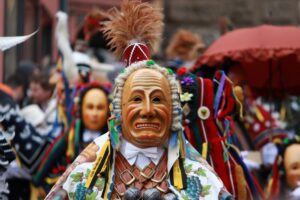
There is a colorful thread that weaves one big celebration between Lazio and Abruzzo in February. It follows the route of the A24 and A25 highways, traverses valleys, plateaus and towns, until it reaches the sea. It is Carnival 2026, which once again accesses cities and towns with parades, floats and traditions that have been handed down for generations.
Francavilla al Mare: the carnival capital of Abruzzo
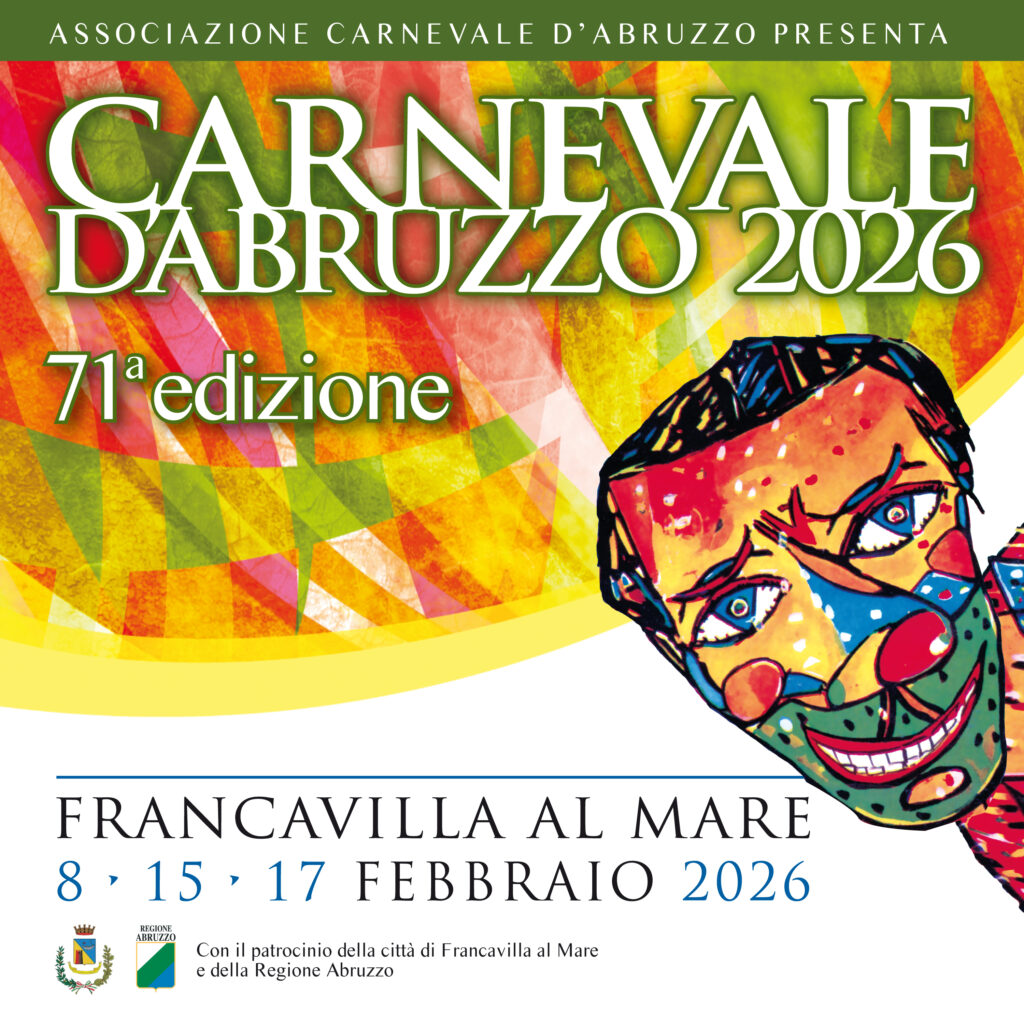
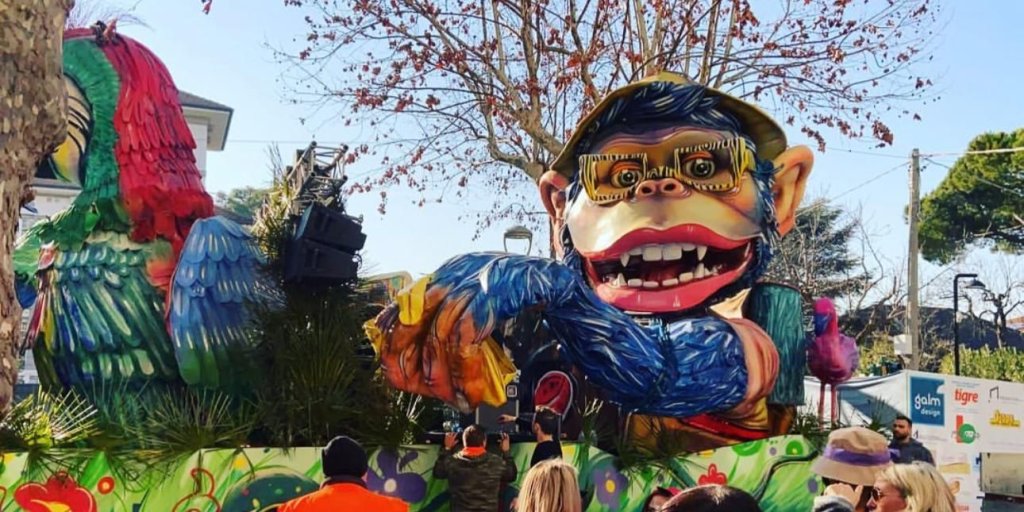
It is impossible not to start with the Abruzzo Carnival of Francavilla al Mare, now in its extraordinary 71st edition, considered the oldest in the region. The big parades-scheduled for Sunday, Feb. 8, Sunday, Feb. 15 and Mardi Gras, Feb. 17-will enliven the waterfront and the city center with five floats, including the unfailing float dedicated to King Patanello, the event’s symbolic mask. Alongside him will be floats dedicated to international music personalities, a float for the little ones and the now traditional social-themed float, enhanced by choreography from local dance schools.
It is an authentic folk festival, an identity celebration that transforms Francavilla into a large open-air theater.
Vicovaro, Tivoli and the Roman Carnival: Lazio stops along the A24
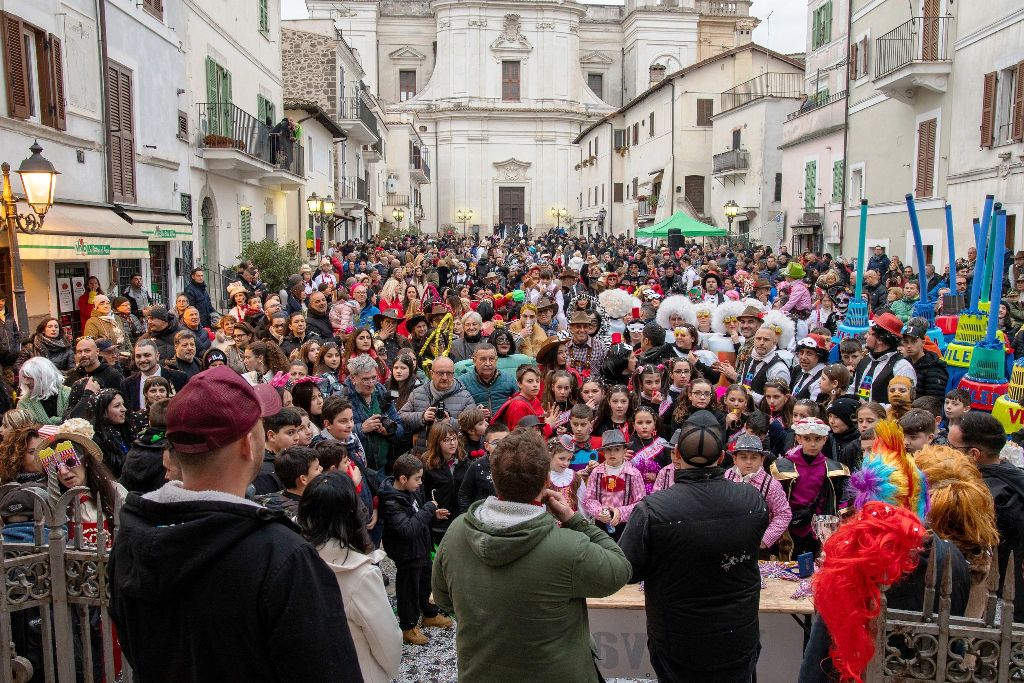
For those leaving from Rome, along the A24 highway, the carnival is just a stone’s throw from the highway exits. In Vicovaro, parades of floats and masked groups will enliven the charming historic village between the Sundays ofFebruary 8 and 15, 2026. In Tivoli, where the carnival has already begun and will end on Feb. 17 with the final parade of the Carnival King.
And then there’s Rome, with its Roman Carnival, which again this year features events spread across piazzas, museums and theaters: from the banks of the Tiber River to the skaters at the Pincio Hill, to Guidonia and Tor di Quinto, family shows, workshops, historical masks and neighborhood parties color the capital throughout Carnival week.
L’Aquila, Sulmona, Teramo and Chieti: Carnival crosses inland Abruzzo
On its route along the A24 and A25, the carnival encounters some of Abruzzo’s most representative cities. L’Aquila, where masks and processions enrich the historic center reborn as the Italian Capital of Culture with cultural initiatives for adults and children. It goes all the way to Sunday, March 2, when “il Carnevale in Piazza” will enliven Piazza Duomo with carnival-themed shows, static games with mascots and masked characters, and music for the little ones.
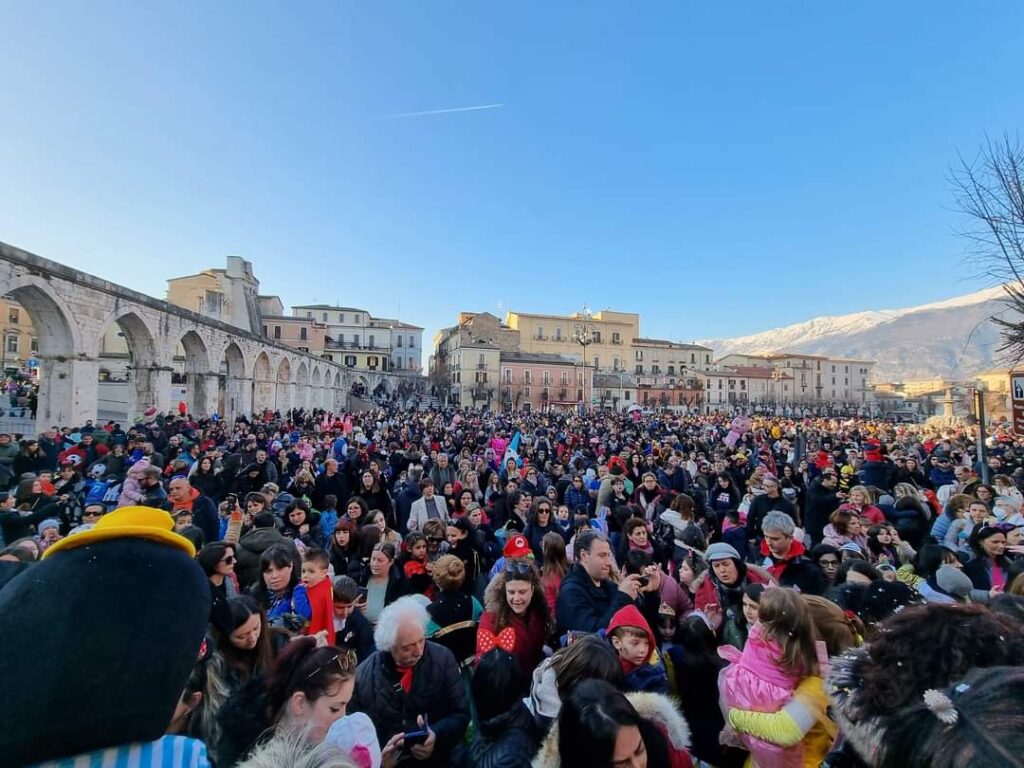
In Sulmona , the carnival renews a long tradition, with a double event: the 58th edition of the Mascherina D’Argento, which will be held in the “Caniglia” Theater on Sunday, Feb. 15, and the Carri allegorici, which will parade along Corso Ovidio on Tuesday, Feb. 17, to Piazza Garibaldi, under the arches of the magnificent Swabian aqueduct. In Chieti , the carnival follows tradition, with a parade of floats in the historic center, the absolute protagonist of which is the Abruzzese Pulcinella, and the classic pantomime of the trial of the Carnival King contantofuneral and burning of the puppet. In Teramo, a junction point between the Gran Sasso and the sea, its historic center is embellished with carnival initiatives in the neighborhoods, with a rich calendar of events that runs until early March and with “Carnival on Display,” an exhibition dedicated to the world of Mecha & Ufo-Robots, from 20 years old and up. Ufo-Robot, Feb. 20 through March 4, at the Gran Sasso shopping center.
The traditions of small villages along the A24 and A25 exits
Often less well known, but rich in charm, there are other carnivals that deserve mention, all of which are easily accessible from the highway system:
- Civitaquana (PE), with its historic parade of floats that has enlivened the town with music and colors for 37 years. It can be reached from the Alanno/Scafa exit of the A25 highway.
- Luco dei Marsi (AQ), celebrating the 42nd edition of its local carnival, recommended exit from A24: Avezzano.
- Sant’Egidio alla Vibrata (TE), now in its 31st year, an example of a living and participating tradition. It is easily reached from the Teramo Est exit.
These events, while less known to the large tourist flows, embody the most genuine soul of the Abruzzo carnival.
The rich carnival of the Teramo coast: Martinsicuro, Villa Rosa, Tortoreto and Giulianova
Passing Teramo and descending toward the sea, the A24 turns into a corridor leading to the coast’s liveliest winter festivals.
Martinsicuro and Villa Rosa welcome a grand parade with six floats, with spectacular themes such as Vatican, The Gold of the Deep, The Crazy Wild West, Beauty and the Beast, The Ancient Romans, Peaky Blinders, accompanied by masked groups inspired by Pokémon and the “old Abruzzo farm.” The two locations will host parallel parades, both starting at 3 p.m., from Villa Rosa (Via Fabio Filzi) and Martinsicuro (Via Aldo Moro), respectively.
A little further south, Tortoreto continues the tradition of coastal carnivals, drawing families and visitors with parades, entertainment and street parties.
Last but not least is the Grand Giulianova Carnival, which returns to Giulianova, both in the historic center in the hills and on the Lido, with its lavish floats, an event that combines tradition, creativity and popular participation, transforming the city into a large open-air stage. On Feb. 15 it will be staged in Giulianova Lido, and on Feb. 17 in Giulianova Alta, with Mardi Gras in the heart of the historic center
A carnival that tells a story about a territory, even with the flavors of tradition
Carnival along the A24 and A25 is a journey that combines tradition and modernity: from historic masks such as King Patanello, to creative floats in Martinsicuro, from mountain festivals to parades by the sea. All enhanced by the flavors of tradition.
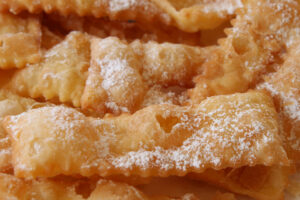
In Latium, the frappe, thin fried and sugared sheets of dough, or castagnole, a kind of soft fried balls, sometimes filled with ricotta or cream. In Abruzzo, where frappe are called chiacchiere or cioffe, cicerchiata reigns over all, a dessert made up of numerous balls of dough, fried with flour, eggs, sugar and oil, joined together with warm honey, and decorated with colored confettini (little devils). You can also try sgaiozzi, fritters made of cooked wine and orange zest, fried potato doughnuts, Li Cumplimente or the classic ferratelle, which, depending on the locality, also take on the name of neole or pizzelle.