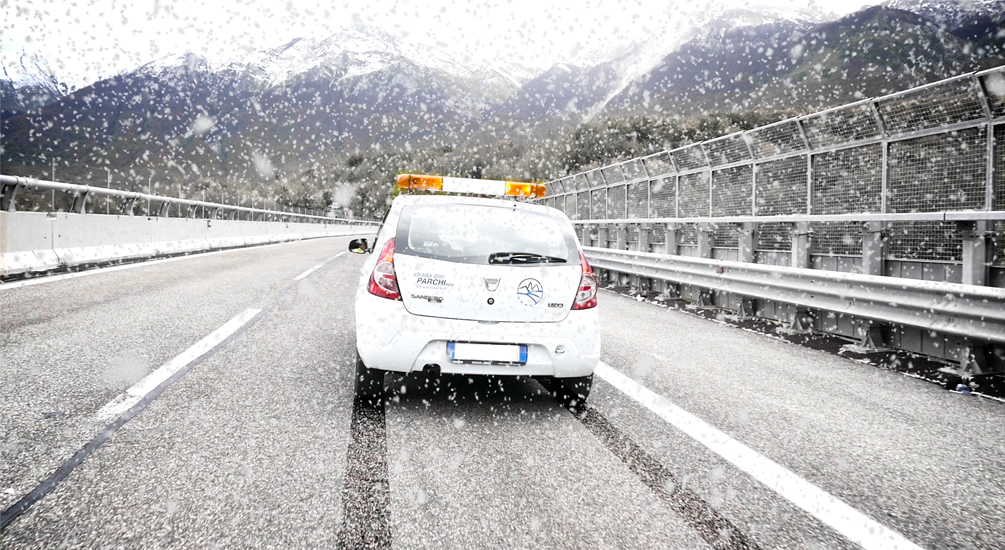
With the arrival of the cold season, as it does every year, Strada dei Parchi deploys an extraordinary operational plan to ensure the safety and passability of the A24 and A25 highways. Winter operations are essential to deal with the adverse weather conditions typical of the Apennines, on the highway network at higher altitudes, where snow and ice can lead to critical road conditions.
The plan includes timely snow removal and ice formation prevention interventions, thanks to a widespread organization involving men, vehicles and technologies. The goal pursued is to ensure the continuity of traffic and minimize inconvenience to motorists.
Operating means: a fleet of 239 vehicles
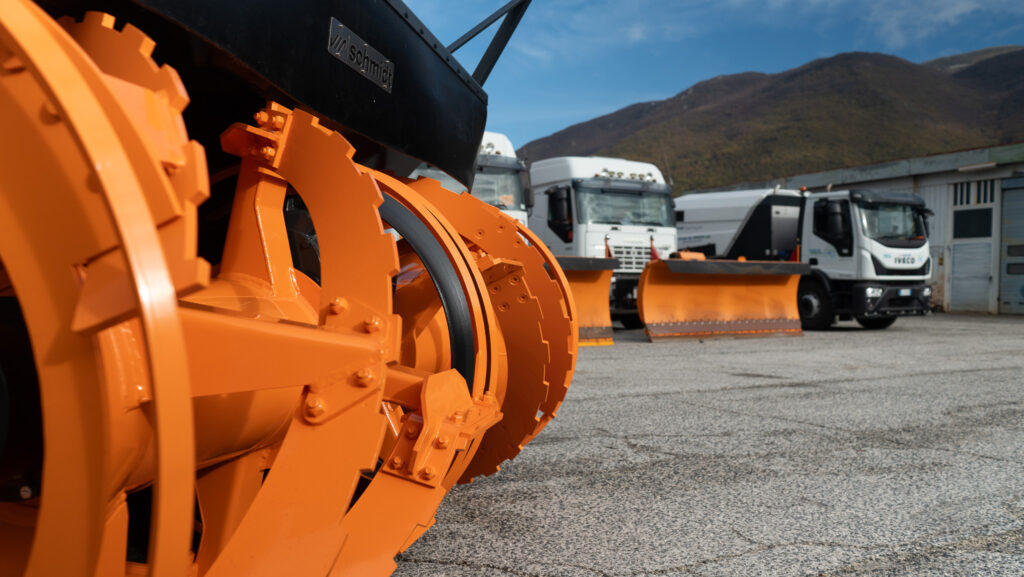
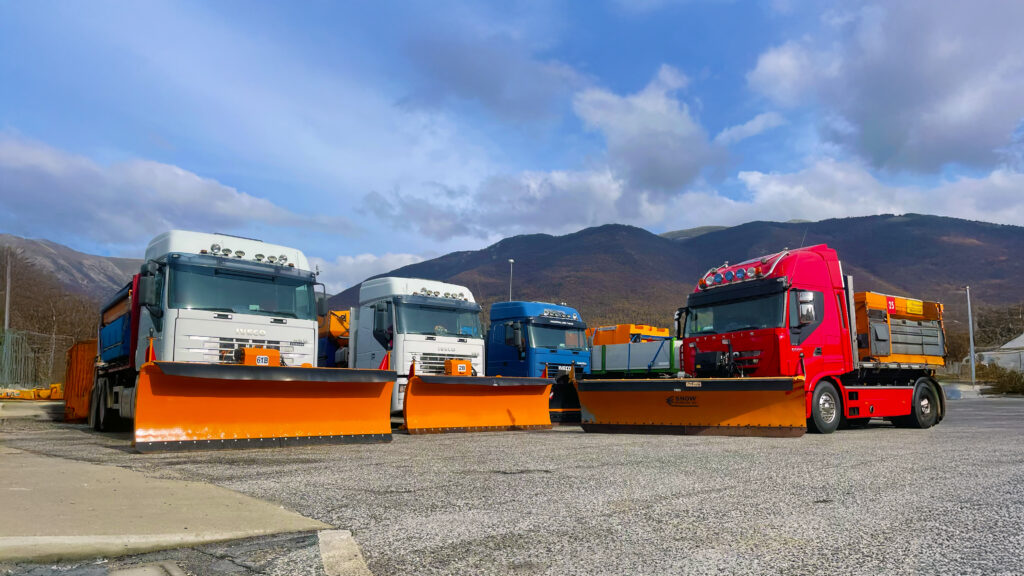
Strada dei Parchi has 239 specialized vehicles ready to go into action in case of emergency. The equipment includes:
- 107 snowplow blades, for rapid snow removal from roadways.
- 61 blade salt spreaders, which combine salt clearing and distribution.
- 13 watering machines, for targeted interventions;
- 3 Self-propelled snow blowers, ideal for large snow accumulations;
- 19 mechanical shovels and 9 Unimogs, for support operations;
- 10 trucks with equipment;
- 16 tractors with ploughshares;
- 1 Firestorm, an innovative means of emergency management.
This fleet, strategically distributed along the network, makes it possible to cope with even the heaviest snowfall and keep the main arteries safe.
Technology and Coordination
In addition to vehicles, the plan relies on weather monitoring systems and road sensors that enable preventive action. Fundamental to the operation of this complex machine is the team of people, consisting of more than 400 specialized technicians, auxiliaries and workers. Coordination between operations teams and control centers ensures rapid and targeted interventions.
Among the operational means employed by Strada dei Parchi to face the winter season, a strategic role is played by salt spreaders with blades and watering machines, essential equipment to ensure the safety of roadways:
Blade salt spreaders combine two essential functions:
- Snow clearing: thanks to the front blade, they remove accumulated snow on the roadway.
- Distribution of salt or salt solutions: prevent ice formation, reducing the risk of accidents.
The dual function enables quick and comprehensive interventions, especially in the early stages of snowfall, when it is crucial to prevent snow from turning into compacted ice.
Waterers are dedicated to ice prevention through the distribution of saline solutions or specific chemicals. They operate in a targeted manner:
- Preventive treatment: before rainfall, to reduce the adhesion of snow to the road surface.
- Localized interventions: in critical areas such as viaducts, tunnels and elevated sections, where the risk of frost is highest.
With this equipment, Parks Road can act proactively, drastically reducing intervention time and improving overall safety.
Dynamic Stopping of Heavy Equipment
In the event of heavy snowfall on certain sections, in order to ensure safety and keep the highway open, a so-called “dynamic stop” of heavy vehicles may be ordered – in agreement with the competent authorities. This measure is intended to prevent the risk of traffic entanglements that would paralyze highway traffic, with the risk of serious accidents, and the interruption of snow removal operations. In such situations, access to the highway is allowed only after being checked by the Police, as required by law. Until their arrival at the affected toll booths, the bars must remain lowered: this is not a closure of the highway, but a temporary measure essential to filter the access of vehicles safely. Locally, it is possible for queues to form, especially at more isolated toll booths, where immediate manning is not always possible. Waiting patiently in the queue for the necessary time means contributing to everyone’s safety.
Tips for motorists in snowy weather
To travel safely during winter, it is also essential to take certain precautions:
- Mandatory equipment: make sure you have winter tires or snow chains on board, as required by regulations.
- Vehicle check: check the condition of brakes, battery, antifreeze fluids and windshield wipers before driving.
- Moderate speed: Reduce speed and increase safety distance to avoid skidding.
- Watch out for signs: follow the directions of variable message signs and authorities.
- Emergency kit: keep a flashlight, blankets, water and a phone charger in the car.
- Trip planning: consult weather reports and traffic information before hitting the road.