Summer is finally here, and with it comes the overwhelming urge to go on a much-needed vacation. The sun is shining high in the sky, temperatures are rising, and the mind is already racing toward those dream destinations we planned during the long winter months. Whether it is the crystal-clear beaches of Southern Italy, the cool Alpine mountains or a tour to discover the artistic beauty of our country, the car remains the favorite travel companion of most Italians.
But before loading up the suitcases and setting off on an adventure, it is essential to devote a few moments to our faithful four-wheeler. It is not a matter of becoming an expert mechanic or possessing special technical skills: just a few simple checks, within everyone’s reach, are enough to ensure that the journey will take place in total safety and serenity. High summer temperatures, in fact, put a lot of strain on various car components, and a small neglected problem can turn into a serious inconvenience just when we least expect it. The goal is to make you more aware and prepared, allowing you to leave with the peace of mind of someone who knows they have done everything possible to ensure a safe and enjoyable trip. Because vacations should be about relaxation and fun, not worries and unforeseen events.
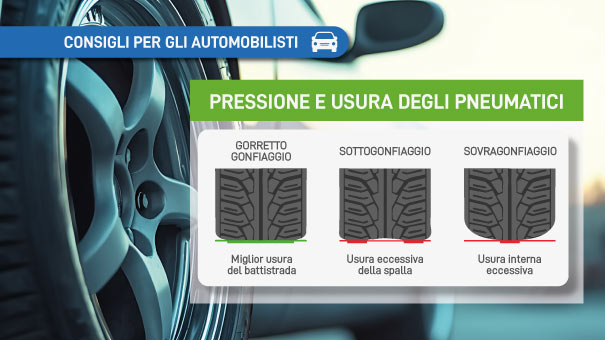
Tires represent the only point of contact between your car and the asphalt, a detail we often forget but which is of crucial importance for safety. During the summer, this component is under particular stress: high temperatures affect the air pressure in the tires, while hot asphalt can reach temperatures above 60 degrees, putting a strain on the rubber compound.
Therefore, pressure inspection is critical for safety. It is probably the most important check before leaving for vacation: incorrect pressure compromises safety, increases fuel consumption and accelerates tire wear. But the good news is that it is a very simple operation.
The ideal time for this check is when the tires are “cold,” that is, when the car has not driven more than two kilometers or has been stationary for at least three hours. Rolling heats the tires and raises the pressure, distorting the measurement.
The correct pressure values can be found in the owner’s manual, on a label on the fuel filler door, or on the driver’s side door pillar. They are expressed in “bar” and vary between 2.0 and 3.0 bar, with possible differences between front and rear axles.
During summer travel, especially with the car fully loaded, it is advisable to slightly increase the pressure by 0.2-0.3 bar over standard values. This helps to compensate for the increased weight and high temperatures, providing better stability and reducing the risk of overheating.
When and where to check
Check the pressure at least once a month, but before a summer trip it becomes essential. You can do this at any gas station with a compressor and pressure gauge, or at a garage. Many operators offer this service free of charge. If a tire loses pressure frequently, don’t just inflate it: there may be a leak that requires a tire shop.
The visual inspection
Spend a few minutes on a visual check of the tires. Look at the tread: if the thickness is less than 1.6 millimeters (legal limit), replace the tires. A simple trick: insert a one-euro coin in the groove-if you see the gold crown completely, it’s time to change them. Also check for cuts, bulges or foreign objects. These defects can cause pressure loss or, in severe cases, bursting while running.
The spare tire
Don’t forget the fifth wheel: check its pressure and overall condition for it as well. This component, often unused for months, can prove vital in an emergency. Remember, however, that the fifth wheel has speed (80 km/h) and travel restrictions, and is only meant to allow you to reach the nearest garage.
Proper pressure improves safety and consumption!
Safe travels.