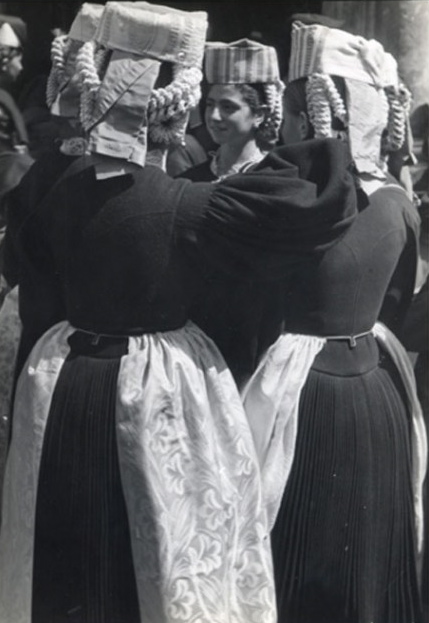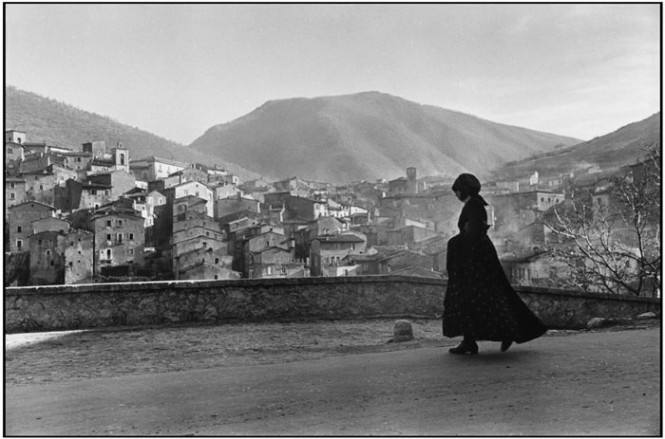
In addition to being one of the most beautiful villages in Italy, famous for its typical female costumes, the town of Scanno is also known for being the subject of study among the most important photographers of the 20th century. That is why the town in the province of L’Aquila with medieval features, surrounded by the mountains of the Abruzzo National Park, is also known as the “city of photographers. “
Over the years, the nature that laps the village, its conformation and the traditions preserved over time have attracted many Italian and foreign artists who have imprinted the women of Scanno, the most striking views and the daily activity in the village in their films. Internationally renowned photographers who have stopped in Scanno include photo-journalism pioneer Henri Cartier-Bresson, German photographer Hilde Lotz-Bauer, and Italian Mario Giacomelli, famous for his landscape portraits and the photo “the Scanno child,” or Scanno Boy.
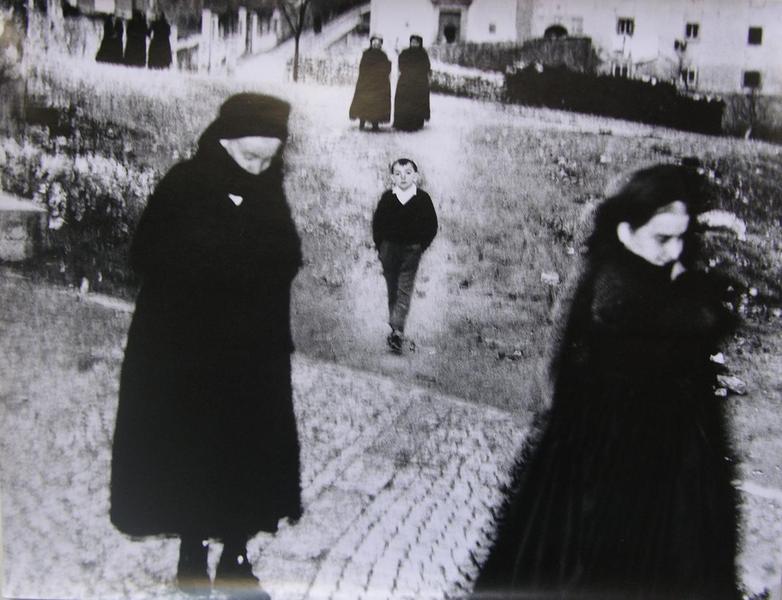
The Child of Scanno, by Mario Giacomelli
The photograph “The Child of Scanno” has literally gone around the world, becoming something of an icon of Abruzzo culture. The shot is on display at New York’s Museum of Modern Art (MoMA) and dates from 1957; it depicts four women in traditional costume, but the only subject in focus is a child, proceeding with his hands in his pockets and with a way of walking that looks like an adult. The photo is charged with a surreal atmosphere and at the same time conveys a strong dynamism due to the movement of the five figures. Three years ago the weekly newspaper “il Venerdì di Repubblica” went to find that child, now a man. He no longer lives in Abruzzo but in northern Italy. Today after a lifetime in the armed forces he is retired.
The Abruzzo of Henri Cartier-Bresson
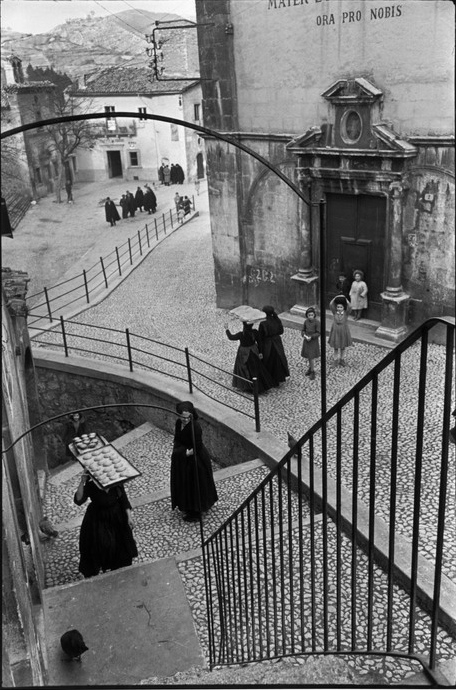
Henri Cartier Bresson, pioneer of photojournalism and master of the decisive instant was also a precursor of surrealist photography. He immortalized Scanno in the early 1950s, and his shots of the Abruzzo village have been shown in countless international exhibitions and are part of the history of world photography. Cartier-Bresson’s photos seem to evoke the synthesis of Scanno’s places and inhabitants: on film the traditions of the village come alive in the moment of an action, among the most characteristic views the life of the community is documented. In the interview that Bresson granted to Arte, a few months before his death, he will indicate as “the photo” precisely what he will call “Mater Carmeli.” Bresson, lurking on a long stone staircase, captures and fixes the actions of women and girls in this shot, right in front of the church of Madonna del Carmine in Scanno.
Scanno’s 1920s portrayed by Hilde Lotz-Bauer’s Leica
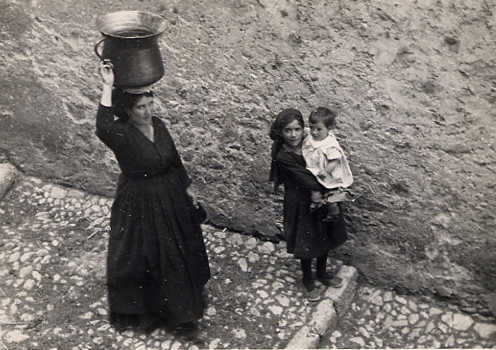
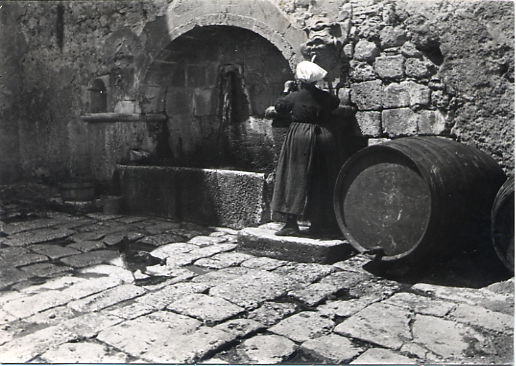
Cartier-Bresson was not the first or even the last photographer to discover the beauty of Scanno. More than twenty years before him the German photographer, Hilde Lotz-Bauer, captured the faces of women and views of the village with her small Leica. Most of the subjects portrayed by Hilde Lotz-Bauer are indeed women. Women at work outside the doors of their homes, girls on street corners. Women carrying basins full of freshly washed laundry on their heads, or in the village square as they are busy stirring a cauldron with ash leaves in it to dye the wool of their skirts.
How to get to Scanno: A25, Cocullo exit
The route