1. Tunnel Structure and Safety Devices
The A24 and A25 highway tunnels are equipped with systems designed in accordance with Legislative Decree 264/2006 and subsequent ANSFISA guidelines to ensure a high level of safety, especially in tunnels longer than 500 meters.
Main equipment found in the tunnel:
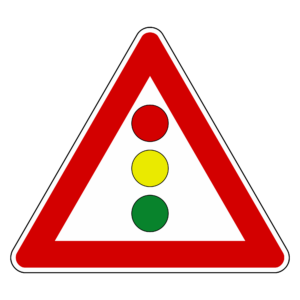
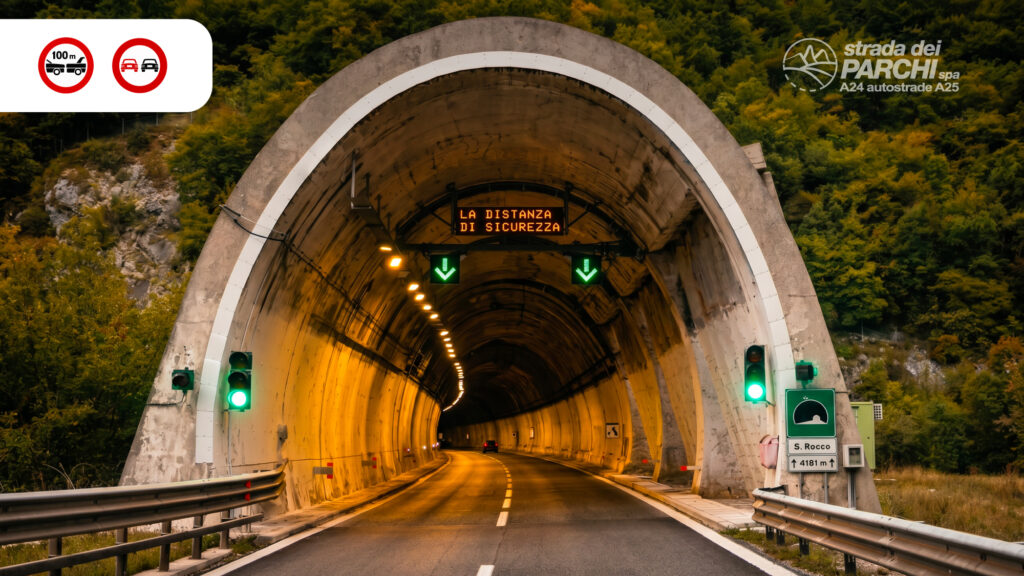
- Three-light traffic signals (green, flashing yellow, red): indicate whether the tunnel is open to traffic (green) or closed due to accidents or fires (red), or warn drivers to proceed with caution due to roadwork, stationary vehicles, accidents, or fires (flashing yellow)
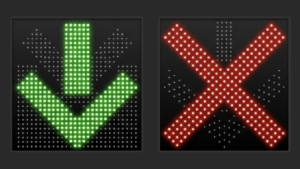
- Arrow/cross signs: Located above each lane at every tunnel entrance, these signs indicate whether the lane is open (green) or closed (red).
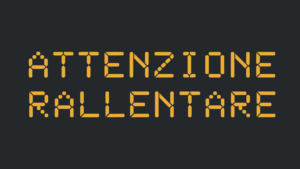
- Variable-message signs: These signs supplement road signs with a brief message in the event of traffic congestion, an accident, or an emergency.
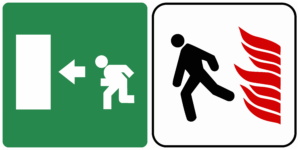
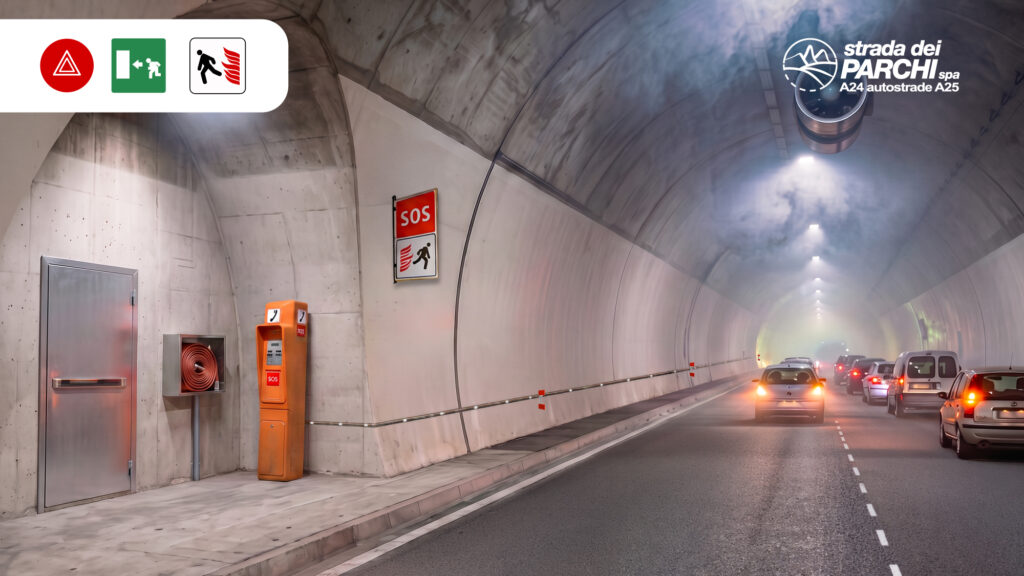
- Emergency exits: In tunnel sections longer than 500 meters, there are emergency exits that are clearly marked with lighted guides and signs indicating their distance, allowing you to reach areas where you can wait for help to arrive. If you use an emergency exit, pay close attention to any vehicles traveling in the opposite tunnel tube.
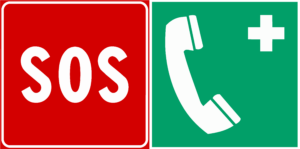
- SOS kiosks and emergency phones: Where present and marked, they are located at regular intervals and are intended solely for reporting malfunctions or requesting emergency assistance. If there is no SOS kiosk, you can use your smartphone to report the names of the tunnels and the kilometer markers shown on the appropriate signs.
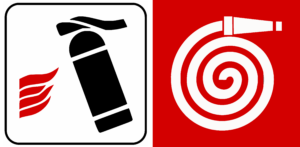
- Fire extinguishers, fire hydrants, and fire suppression systems: provided every 250 m in accordance with regulations.
- Lighting, ventilation, and SCADA systems: to ensure visibility, air quality control, and centralized infrastructure management.

2. Proper Behavior in Tunnels
2.1 Regular Traffic
- Continue to use your low beams and remove your sunglasses; observe the speed limits and following distances posted at the tunnel entrance. Avoid passing buses and heavy vehicles.
- Pay attention to traffic lights at intersections and lane arrows or crosses (if present); follow the instructions on the variable-message signs.
- Do not stop the vehicle, do not make a U-turn, and do not reverse.
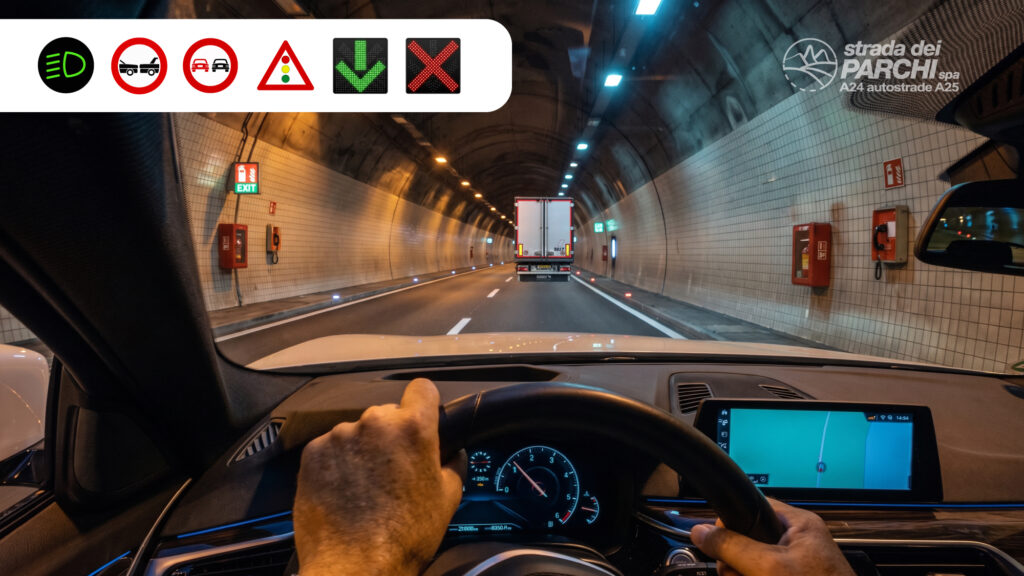
2.2 Traffic Jam or Traffic Congestion
- Turn on your hazard lights and maintain a safe following distance from the vehicle in front of you.
- Do not take up the entire lane; pull over to the right and keep the center lane clear.
- Turn off the engine if the stop is going to be prolonged; stay on board and wait for instructions.
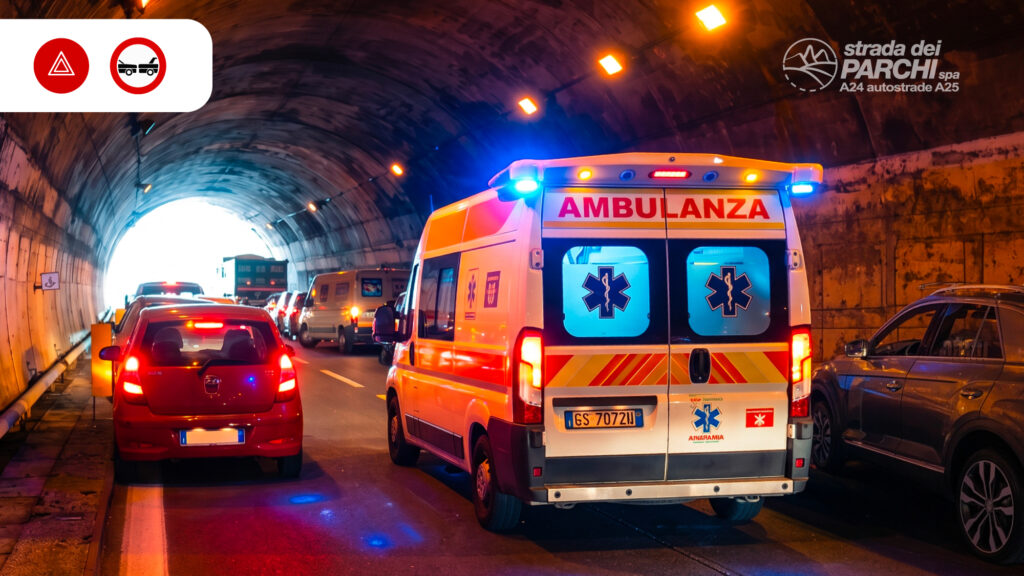
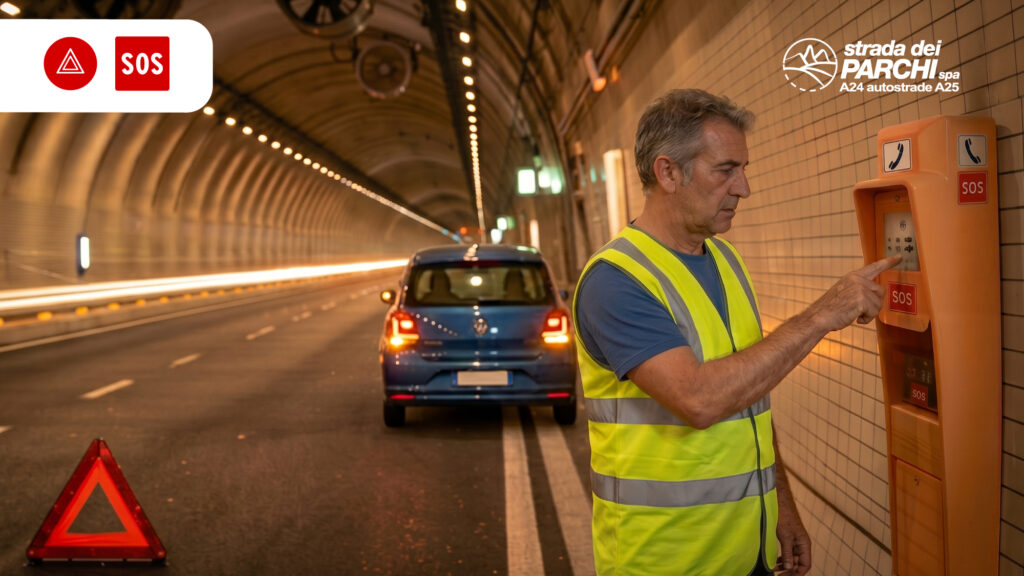
2.3 Broken-down vehicle
- Drive to the pull-off area or pull over to the right shoulder; turn on your hazard lights and turn off the engine.
- Put on your high-visibility vest; place the warning triangle at an appropriate distance (in tunnels, ≥ 100 m, where possible).
- If available, use the SOS phone (or your cell phone) and wait for help in a safe area.
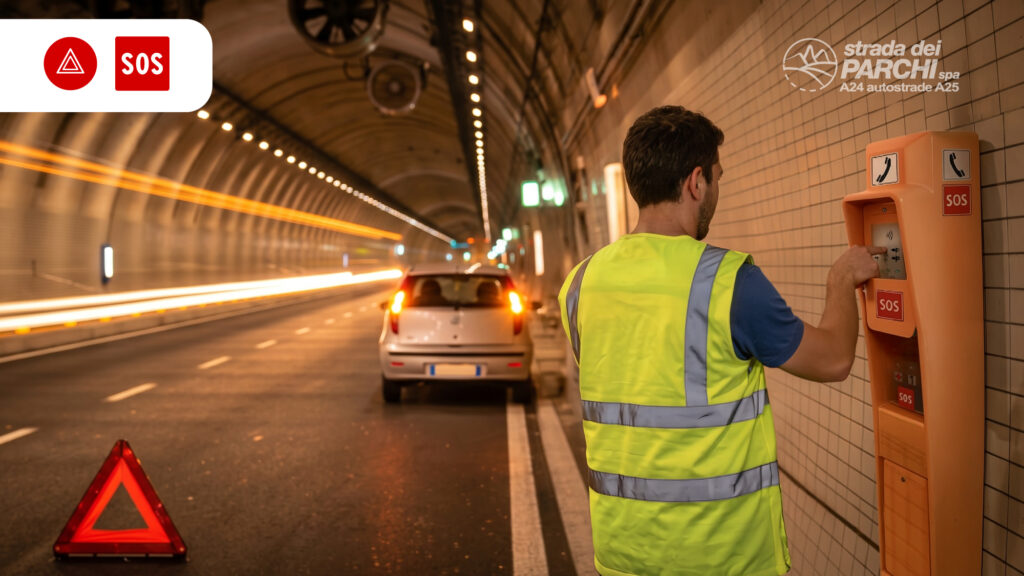
2.4 Fire
- Pull over to a safe location and turn on your hazard lights; attempt to extinguish the fire only if it is in its early stages; otherwise , wait for specialized personnel to arrive.
- If you notice smoke or heat, exit the vehicle immediately and proceed quickly toward the emergency exits, using the emergency lighting.
- Do not make U-turns or back up; yield to emergency vehicles by pulling over to the side of the road, leaving the center of the roadway clear for emergency vehicles to pass, if possible.
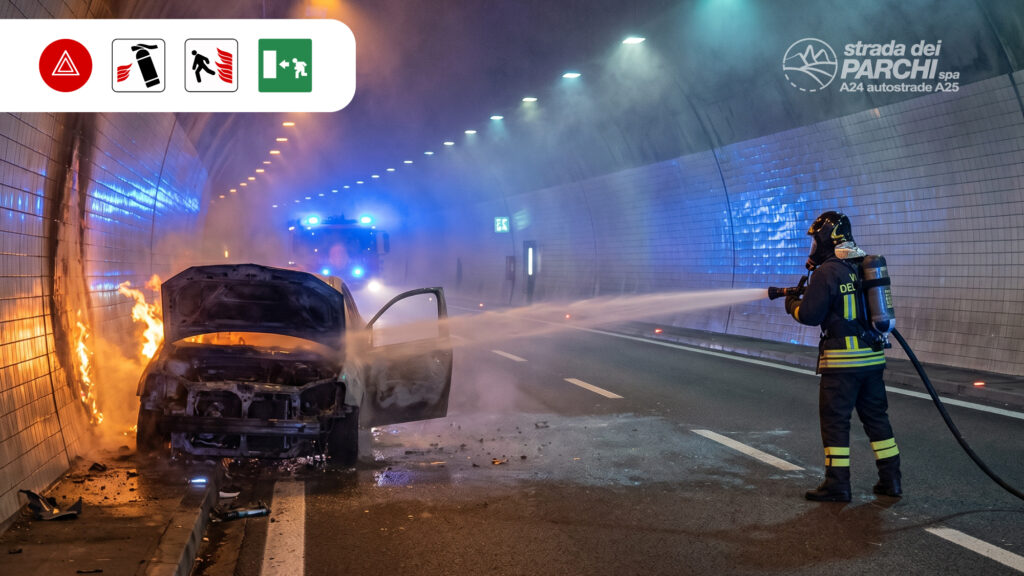
2.5 Accident
- Turn on your hazard lights, pull over to the right; after turning off the engine, put on your reflective vest.
- Assess the safety situation; set up the warning triangle whenever possible; send an SOS alert if available (otherwise, use your cell phone).
- Stay within the protected area (niche/behind the guardrail); do not make a U-turn or back up.
2.6 Evacuation (on command or due to smoke/fire)
- Do not reverse; leave the keys in the vehicle, turn on the hazard lights, and get out of the vehicle immediately.
- Follow the evacuation lighting to emergency exits/cross-passages, which are marked by the appropriate signs;
- Proceed on foot “toward the emergency exits,” closing the fire doors behind you; wait for instructions in a safe area and pay close attention to any vehicles traveling on the other tunnel if it has not yet been closed to traffic.
2.7 Requirements for tunnels >500 m
For tunnels 500 m or longer, in accordance with EU and national regulations, additional measures are in place and are indicated along the route:
- Reduced speed limits as indicated at the entrance to and along the tunnel.
- Minimum distance between vehicles: 100 m (even in the event of traffic slowdowns).
- No passing for all vehicles, including buses and vehicles >3.5 t.
Single emergency number: 112. Call this number from a cell phone in case of an emergency, and be sure to state the name of the tunnel and the kilometer marker indicated on the signs.
All users of the A24 and A25 tunnels are asked to follow these guidelines to ensure their own safety, the safety of others, and the smooth flow of traffic. In the event of an emergency, the “strada dei parchi” concessionaire recommends using the emergency systems, following the signs, and awaiting instructions from the appropriate authorities.