From towers built to defend against pirate raids to the fortresses of mercenary captains, including castles that have played a part in historical events. For the third installment of our journey through the castles accessible from the A24 and A25 highway exits, we head to the Adriatic coast, where the sea is not just a spectacular backdrop but a key player in history. For centuries, in fact, trade, wealth, and opportunities—but also threats—have come from the sea, shaping the landscape and architecture of these lands.
The Cerrano Tower, a bulwark against pirates
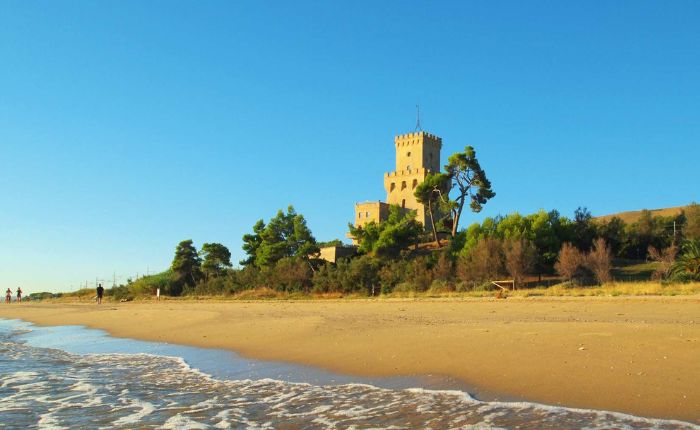
The first stop is one of the most recognizable landmarks along the Abruzzo coast: the Torre del Cerrano, located between Pineto and Silvi. Today it stands serenely between the beach and the sea, nestled within the splendor of the Marine Protected Area, but its origins tell the story of a far more turbulent era.
The tower was part of the defensive system built along the coasts of the Kingdom of Naples during the Spanish Viceroyalty, when the Adriatic coastline was frequently threatened by pirate raids coming from across the sea. The coastal populations lived in fear of looting and raids that, between the 15th and 16th centuries, severely affected many towns in Abruzzo.
From here, the sentinels scanned the horizon, ready to sound the alarm in case of any suspicious sightings. The tower stands directly on the beach, within Abruzzo’s first Marine Protected Area, which safeguards about seven kilometers of coastline characterized by dunes, coastal pine forests, and seabeds rich in biodiversity.
Today, the fortress is not just a historical monument: it houses the Maritime Museum, a specialized library, and the International Center for Veterinary Training, making it a hub for scientific, cultural, and educational activities related to the marine environment.
Ortona and the castle perched above the Adriatic Sea
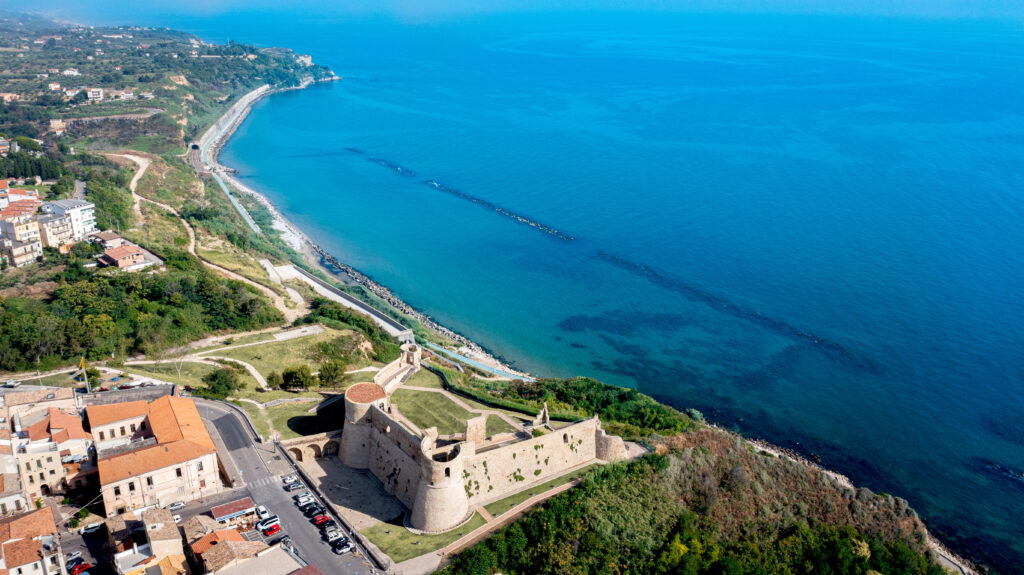
Continuing south, you’ll reach Ortona. Here, perched on the promontory overlooking the harbor, stand the striking ruins of the Aragonese Castle.
Its walls bear witness to centuries of military and maritime history. Built to control one of the most strategic points along the Abruzzo coast, the castle played a central role in the events that shaped the Kingdom of Naples and, over time, endured sieges, renovations, and destruction.
Today, what remains of the fortress continues to hold an extraordinary fascination. The imposing walls overlook the sea and the port of Ortona, creating one of the most photographed views along the entire coast. During the summer, the site also transforms into an open-air stage hosting concerts, performances, and cultural events, offering the public the privilege of enjoying a show with the sea as its backdrop.
The highlight is the Night of the San Rocco Fireworks on August 16, but with the“Estate Ortonese 2026” program, any occasion is a good one to visit this lively Adriatic town—from the White Night on August 22, the first festival of slow travel and sustainable tourism, concerts, food festivals, shows, and sporting events throughout the season.
Crecchio, the castle that once hosted a king of Italy
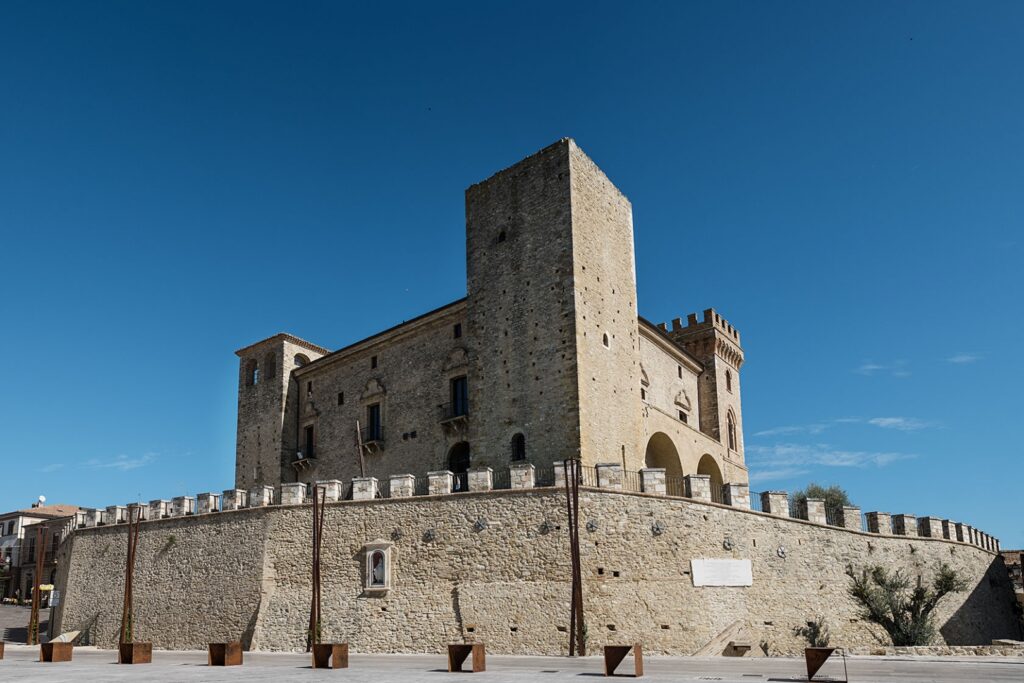
Leaving the coast and heading a few kilometers inland along the road that leads to Guardiagrele, you’ll come across one of Abruzzo’s most picturesque villages: Crecchio. Surrounded by lush hills covered with vineyards, olive groves, and cultivated fields, the village is dominated by the elegant Ducal Castle, now home to the Museum of Byzantine and Early Medieval Abruzzo.
But above all, the castle preserves a dramatic chapter in Italian history. On the night of September 8–9, 1943, the day after the armistice was announced, it served as a temporary refuge for several hours for King Victor Emmanuel III and the royal family during their hasty escape from Rome. From here, the king continued on to Ortona, where he boarded a ship bound for Brindisi and the seat of the Badoglio government. The tour includes the historic rooms of the ducal residence, the inner courtyard, the oldest tower, and a section dedicated to the events of September 1943.
Particularly evocative are the rooms that recall the passage of Victor Emmanuel III, Queen Elena, and Prince Umberto during their escape from Rome following the armistice. The castle, in fact, houses photographic records and accounts related to that fateful night in Italian history.
As you stroll through the castle’s halls and the village streets, you get the feeling that you’re passing through places where grand history and everyday life have intersected in a sudden and decisive way.
Vasto and the Caldora Fortress
The final leg of the route follows the Costa dei Trabocchi Greenway to Vasto, the elegant city overlooking the Golfo d’Oro.
After admiring Palazzo d’Avalos and its famous gardens overlooking the sea, it’s worth venturing into the historic center until you reach the square dominated by Caldoresco Castle, one of the most significant reminders of the city’s turbulent past.
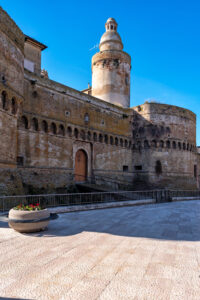
The fortress was built by the powerful Caldora family, a renowned dynasty of feudal lords and mercenary captains who played a leading role in the struggles between the Angevins and the Aragonese for control of the Kingdom of Naples. In the mid-19th century, part of the structure was modified to house Palazzo Palmieri, and what remains of the ancient fortress today are primarily the imposing 16th-century bastions that protected the moat, along with two distinctive towers: one crenellated and the other topped by a curious little dome that makes the castle’s silhouette instantly recognizable. The castle also appears on a historic postage stamp, issued in the 1980s with a face value of 1,400 lire, which for decades accompanied letters and postcards from Italy around the world. The complex is now largely privately owned, but its presence continues to dominate the urban landscape of the historic center.
After all, the entire city of Vasto still tells the story of its past, from the Greek Istonion to the Roman Histonium, right up to the centuries when it was the center of a strategically located fiefdom, first under the Caldora family, then the Guevara family, and finally the D’Avalos family. Walking through the city’s streets, you’ll come across numerous traces of the ancient walls, gates, and medieval towers, some of which are now incorporated into modern buildings. A mosaic of history that guides visitors toward unforgettable panoramic views, where the gaze opens up to the light and colors of the Adriatic Sea.
A Journey Through the Sea and History
The Cerrano Tower is easily accessible via the A24, heading toward the Teramo coast in the direction of Pineto. To visit Ortona, Crecchio, and Vasto, simply follow the A25 to the junction with the A14 and continue south toward Bari. In about two hours’ drive from Rome, you can explore an itinerary that combines coastal towers, medieval castles, picturesque villages, and some of the most captivating landscapes along the Abruzzo coast of the Adriatic Sea.