
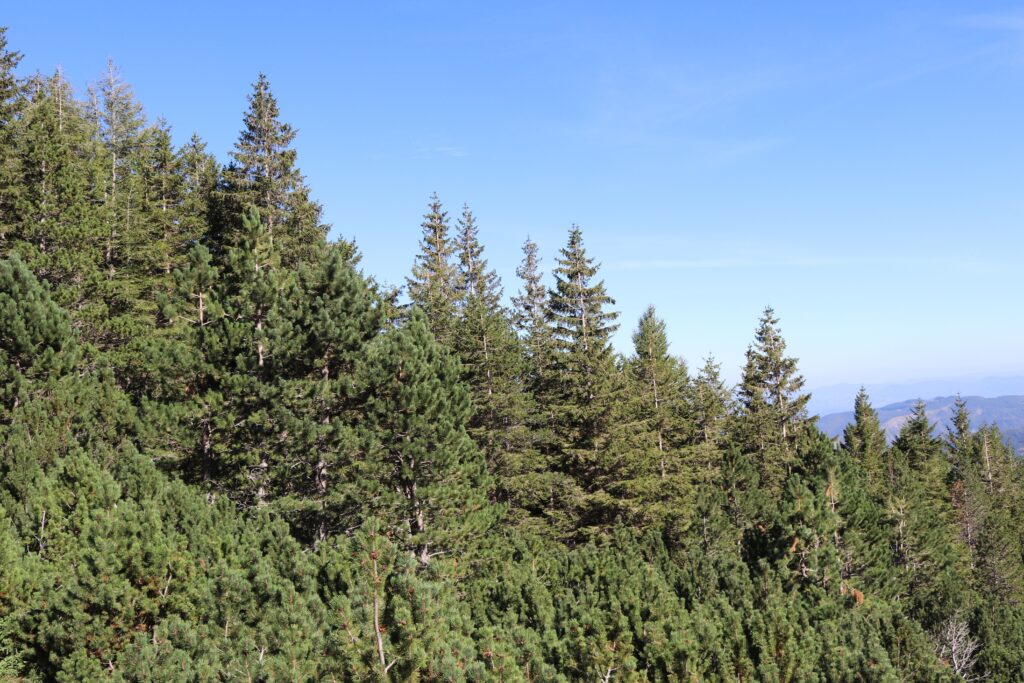
With the recent decree of the Ministry of Agriculture and Forestry, theAbetina di Rosello, in Abruzzo, has been officially enrolled in the first place of the National Network of Ancient Forests, becoming the number one ancient forest in Italy. This historic recognition confirms the ecological value of this ancient fir forest, which has remained intact for more than a century and is now a model of forest protection nationwide. Prominent among the stars of this Nature Reserve is a specimen that, at 50.25 meters tall, is recognized as the tallest in southern Italy and the third tallest wild tree in the country, nicknamed theFir of the Brigands. Not easy to distinguish among other firs, often more than 40 meters tall, it can only be seen in its entirety in the winter period after the deciduous species’ leaves have fallen. It owes its name to the fact that famous local bandit leaders, more than a century ago, allegedly found shelter in these very woods.
In addition to Rosello, an extraordinary forest heritage develops between Abruzzo and Lazio, easily accessible along the A24 and A25 highways. In the Maiella National Park, the striking Bosco di Sant’Antonio stands out, famous for its monumentally shaped centuries-old beech trees. In the Gran Sasso and Monti della Laga National Park emerges the Pietralunga beech forest, one of the most intact forests on the Teramo side.
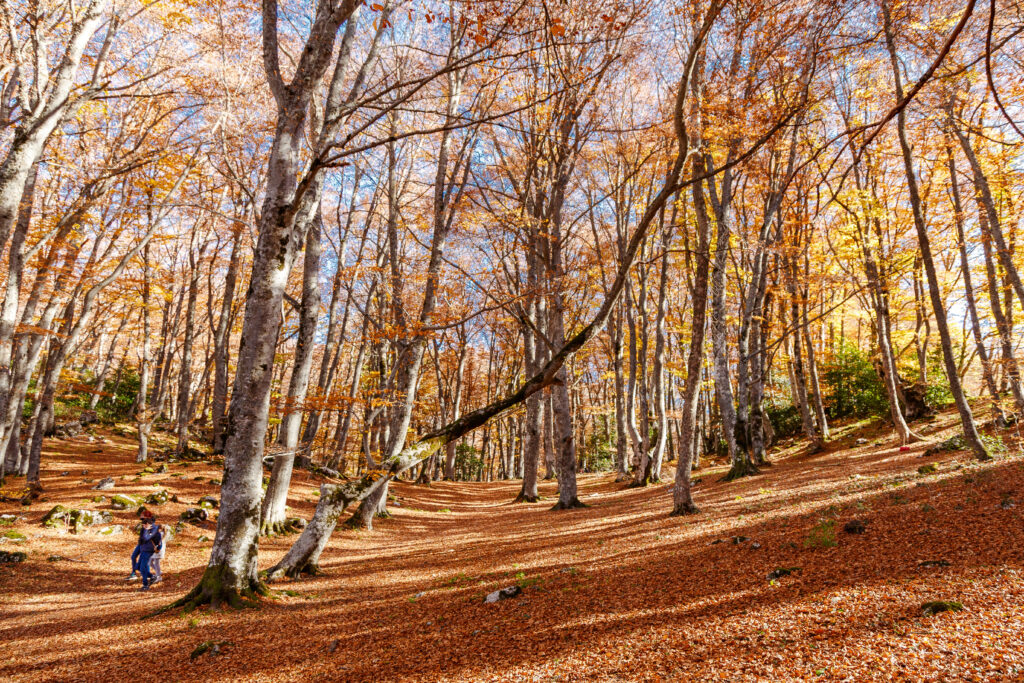
The Abruzzo, Lazio and Molise National Park, on the other hand, holds some of the oldest forests in Europe, such as Val Cervara and Coppo del Principe, both recognized by UNESCO, along with the luminous Val Fondillo, among the park’s most beloved valleys.
Alongside the national parks, regional parks also help draw a great green corridor: in the heart of the Abruzzo Apennines, the Sirente-Velino Park holds extensive mountain beech forests that climb the slopes of Mount Velino and the Altopiano delle Rocche plateau. In Lazio, the Simbruini Mountains are home to the largest expanse of beech forests in the region, including karst plateaus, springs and ancient pastoral routes. A few kilometers from Rome, the Monti Lucretili represent a surprising island of naturalness. Their forests, made up of oak and highland beech forests, rise rapidly from hills to ridges, offering sweeping views and unexpected silences.
From the Abetina di Rosello to these great forests, the Italy of old-growth forests and historic beech groves tells the same story: that of a natural heritage that today, more than ever, becomes an opportunity for knowledge, protection and enhancement of the territory.