


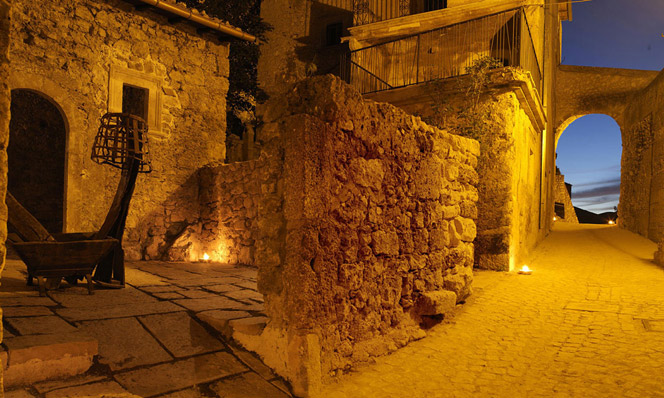
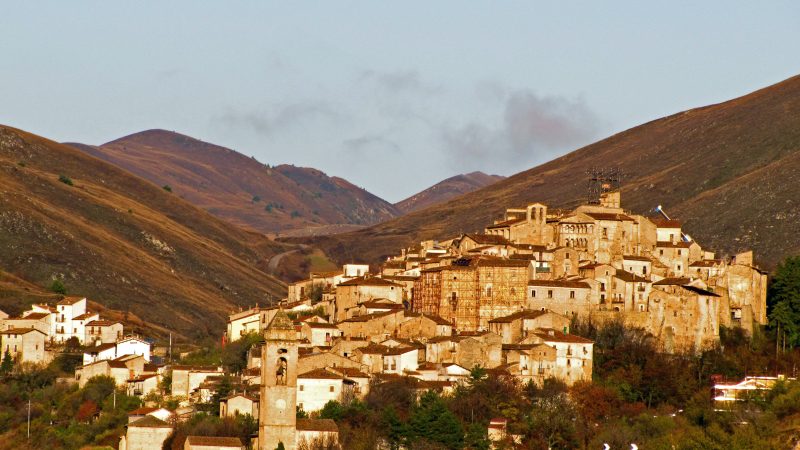
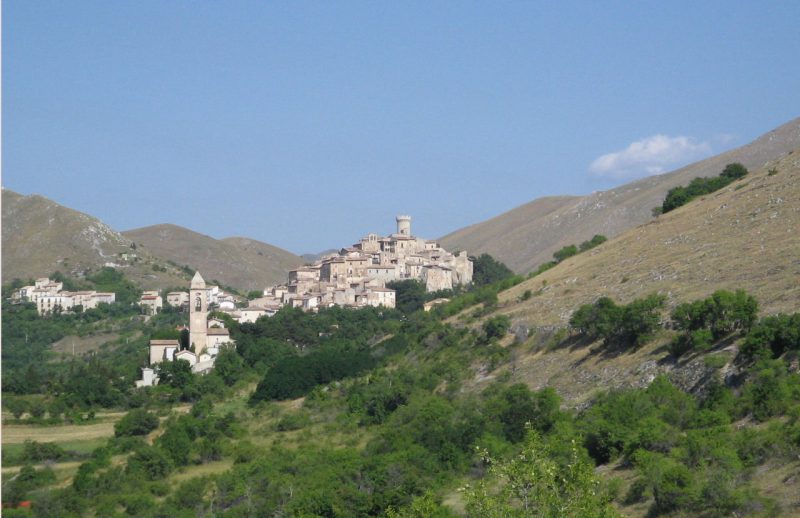
 Santo Stefano di Sessanio is an architectural jewel of the medieval period built entirely of white limestone and consisting of typical house-walls joined to form a defensive wall. The town is part of the club of Italy’s most beautiful villages.
Today the village is a destination for unconventional tourism thanks to the “albergo diffuso” project promoted by Daniel Kihkgren. The young Swedish entrepreneur, after buying part of the abandoned houses in the historic center, renovated them while maintaining their architectural features and turned the village itself into a hotel, preserving the integrity of the surrounding area while respecting local history and culture.
Santo Stefano di Sessanio was built between the 11th and 12th centuries on the ruins of a Roman pagus (village) called Sextantio, from the Latin “Sextantia,” indicating the distance of six Roman miles from Peltuinum, an important crossroads of traffic from Rome to the Adriatic coast. In the 13th century it belonged to the Baronia of Carapelle, later becoming a possession of the Piccolomini and then, from the end of the 16th century, of the powerful Medici lineage. It was under the leadership of Francesco de’ Medici that the village experienced its heyday, around the trade in “carfagna” wool, a coarse black wool mainly used for military uniforms and monks’ habit, produced in Santo Stefano and processed in Florence.
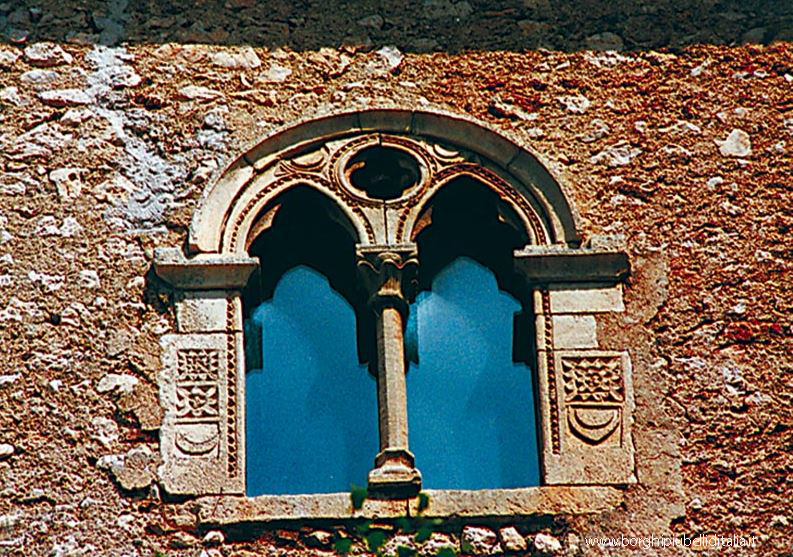
Walking through its winding streets one can admire fifteenth-century dwellings, including the Captain’s house and the fourteenth-century tower known as the Medici, from the top of which an enchanting panorama opens up to the eye, encompassing the Tirino and Aterno valleys and stretching as far as the backdrops of the Sirente and Majella ranges. Unfortunately, the cylindrical tower collapsed in the 2009 earthquake. Fortunately, all the materials of which it was composed, including the interior, have been salvaged and will be used to rebuild it and restore it to its original 20-meter height.
Outside the town are the church of Santo Stefano Protomartire, which takes the form of a single hall in five bays, and the church of Madonna del Lago, which stands just outside the walls on the green banks of a small lake.
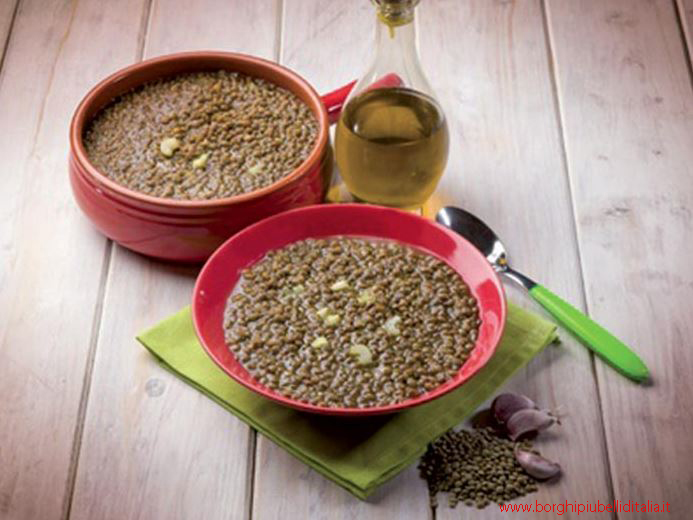
The village is famous for its lentils, a Slow Food Presidium whose quality is guaranteed by a Producers’ Association and which are grown only in the dry soils of high mountains between 1,200 and 1,450 meters. Small, dark-colored, with a wrinkled, thin skin, it is rich in iron and so tender that it does not need to be soaked.
Read more:
www.borghipiubelliditalia.it
How to get to Santo Stefano di Sessanio (AQ): the route