From the Safety Tour to digital inspections at construction sites, from monitoring signage to training with virtual reality headsets: four days dedicated to showcasing the day-to-day work involved in managing the A24 and A25 highways.
Anyone who travels on the A24 and A25 highways every day sees service vehicles on the move, traffic signs, maintenance work, patrols, and workers on the job. Much less visible is everything that happens before and behind each of these activities: training, prevention, inspections, collaboration among colleagues, and new technologies applied to safety.
The European Week for Safety and Health at Work, held from October 19 to 23, provided “strada dei parchi” with an opportunity to shed light on this very daily work, which is less visible to users of the A24 and A25 highways. This week condensed into a few days a variety of activities—normally spread out over recurring events throughout the year—as part of the “Sicuri per Natura” project . These initiatives are also part of the Toto Group’s broader commitment to fostering a culture of prevention that goes beyond mere compliance with standard procedures.
This is the kind of safety you can’t see—and in some ways, the most important kind: the kind that begins long before you hit the road and becomes effective when procedures, tools, and technologies become part of the mindset and daily routine of those who work.
The Safety Tour: Safety Starts with Dialogue
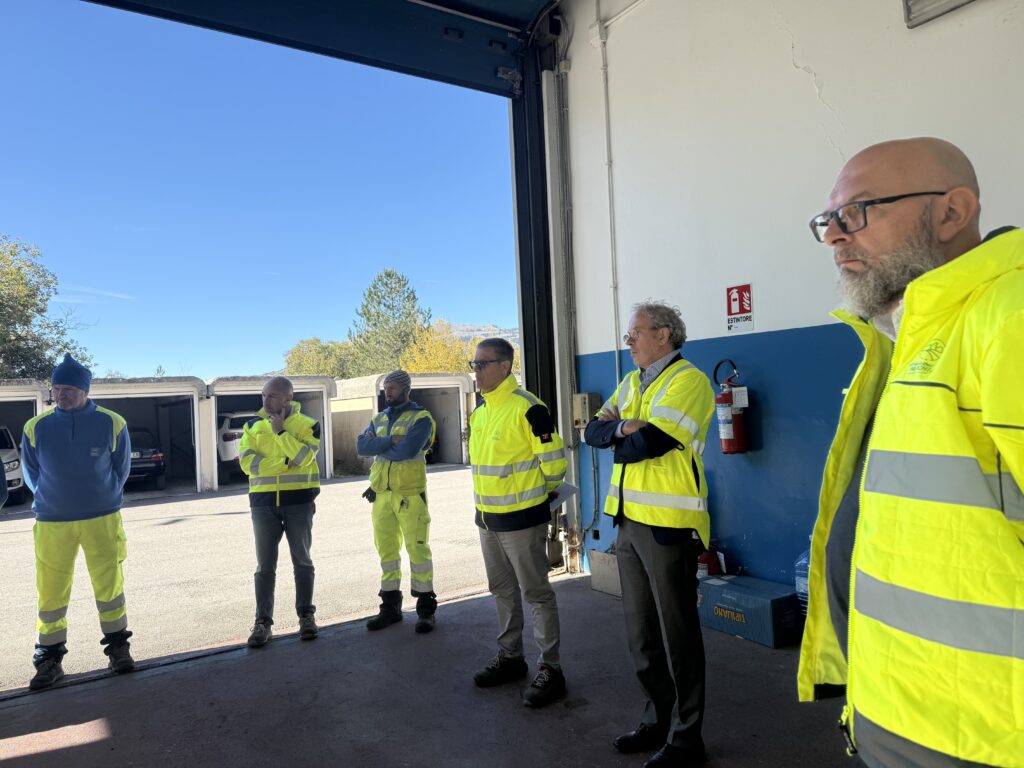
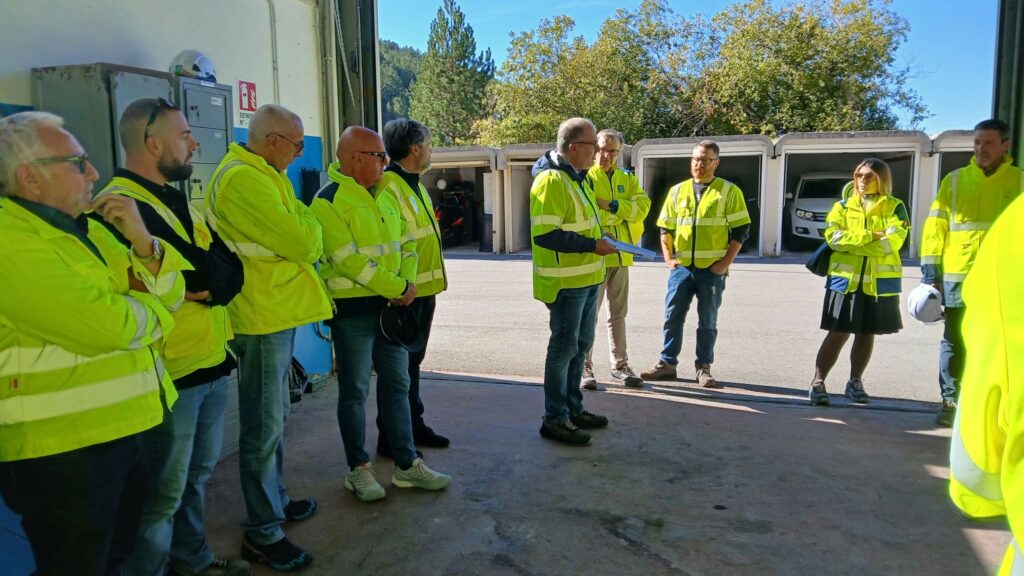
The week began on October 19 with a new stop on the Safety Tour at the Gran Sasso Facilities Center, just a few dozen meters from the famous tunnel. This is one of many regular meetings that bring discussions on safety issues directly to the sites where “strada dei parchi” employees work.
For a concessionaire with offices, facility hubs, and operational teams spread across hundreds of kilometers of network, meeting in person takes on special significance. That is precisely the purpose of the Safety Tour: to bring managers and operators face-to-face, to listen to those who work on the roads and at construction sites every day, and to turn their experiences, observations, and challenges into opportunities for discussion and continuous improvement.
In fact, safety depends not so much on tools and procedures as on the ability to talk about it openly.
A Digital Tool for Inspections
The following day, attention shifted to the operational inspections conducted using a dedicated application in the Colle Molino and Sant’Angelo tunnels on the A24 highway.
Using a smartphone, inspections can be conducted directly on-site by following a digital checklist. It’s one of those steps that aren’t very visible to the user, but are essential for making inspections more systematic and providing concrete support for the work of those responsible for ensuring safety.
It is also an example of how digitization can be integrated into daily operations without replacing the expertise of field staff, but by providing them with more user-friendly tools to perform and document inspections.
A camera that monitors traffic signs
On October 21, the observation point was moved directly onto the roadway. A service vehicle equipped with a special camera traveled along the A24-A25 network to inspect road signs.
The images collected make it possible to identify anomalies and critical issues and to document the condition of vertical and horizontal traffic signs, which is useful for planning maintenance work.
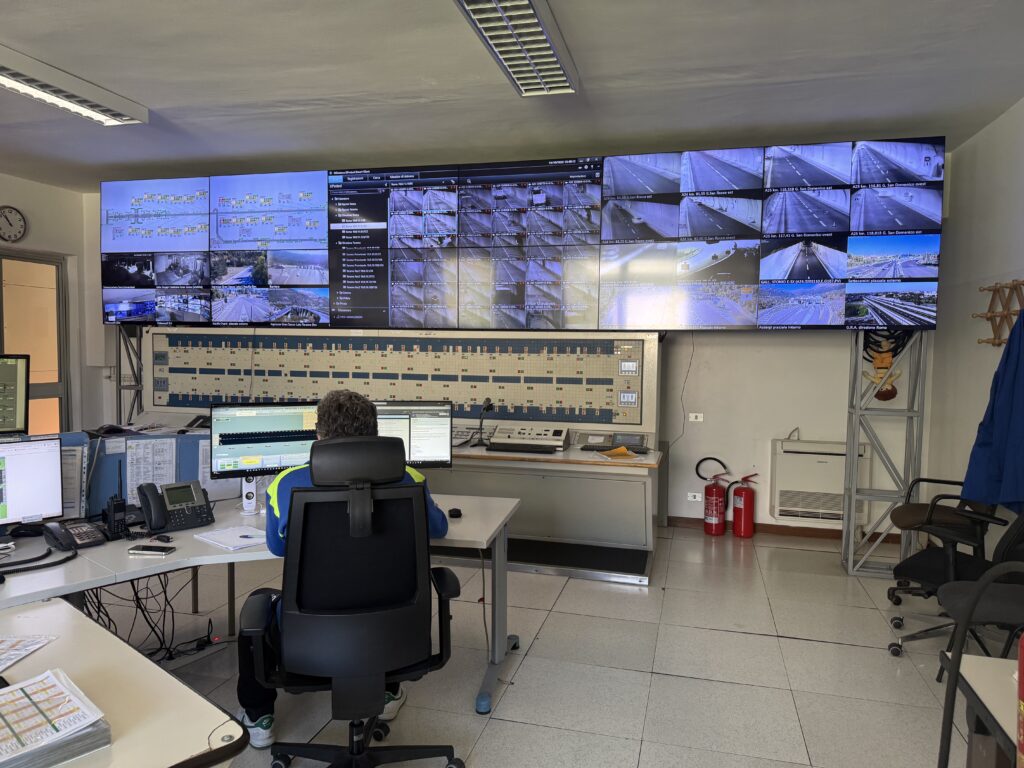
Here, too, technology often operates out of sight of travelers. But it is precisely this ongoing process of monitoring, data collection, and scheduled maintenance that contributes to traffic safety.
Learning to Manage Risk Before It Becomes a Reality
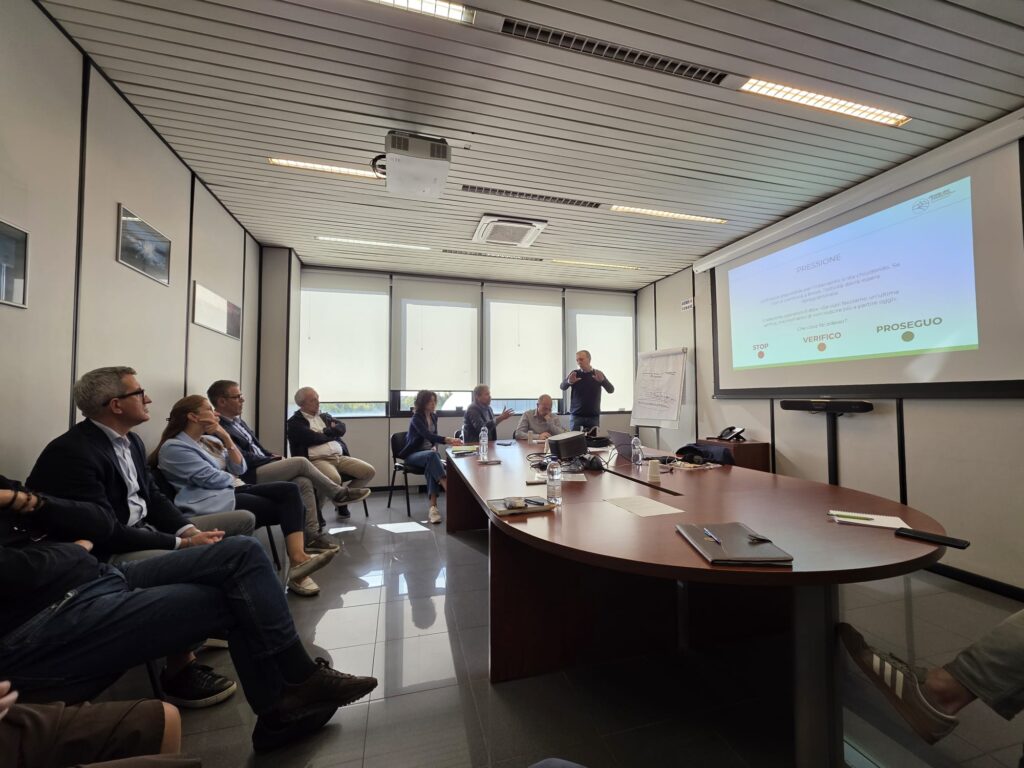
The final day focused on one of the most sensitive aspects: training Safety Leaders. On October 22, at the Via Bona headquarters, exercises using virtual reality headsets and 3D simulations of hazardous situations were conducted.
The opportunity to immerse themselves in a simulated emergency scenario allows responders to confront risks in a controlled environment, testing their attention, reaction time, and ability to follow procedures.
The goal goes beyond training for specific situations. It is to develop a culture of safety throughout the organization, in which everyone is aware not only of their own responsibilities but also of the impact that individual behaviors and decisions can have on colleagues and users.
This approach is consistent with the initiative launched by “strada dei parchi” through “Sicuri per Natura,” which was created specifically to strengthen engagement, experiential learning, and a shared culture of safety.
Safety, Every Day
Four days, four different perspectives on the same topic: listening, checking, monitoring, and training.
European Week for Safety and Health at Work has brought these activities together over the course of a few days, but their significance lies above all in everyday life. Because a safe highway is not just about infrastructure, technology, and procedures. There are people trained to recognize a risk, report it, address it, and share what they’ve learned.
It’s the part of the job that people traveling on the A24 and A25 will probably never see, but it’s an essential component of everyone’s safety.