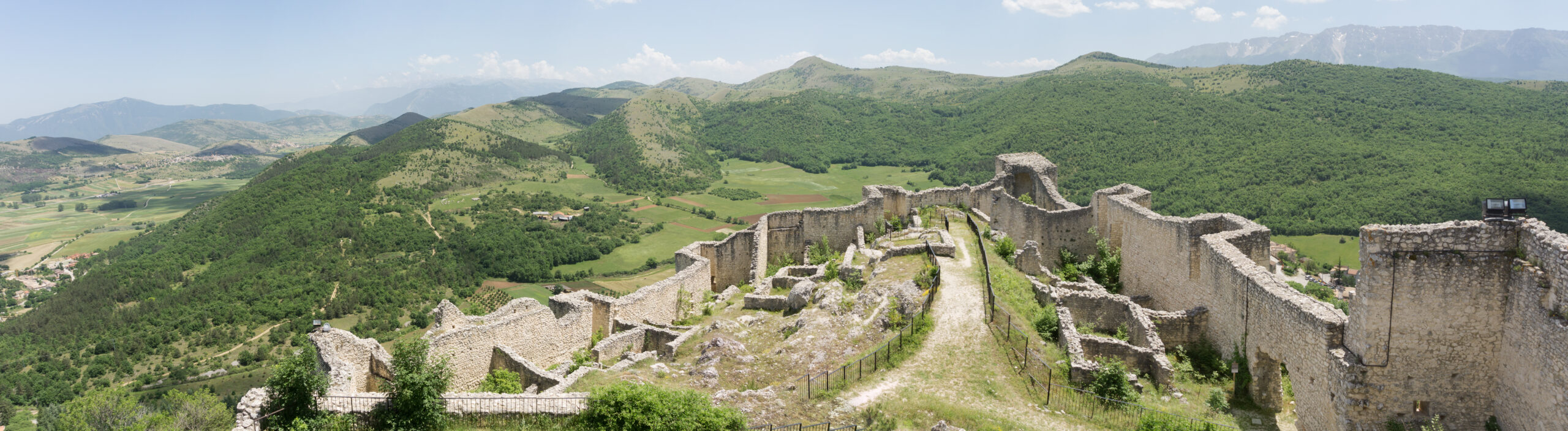
Continuing the journey among the castles and fortresses that dot the territories crossed by the A24 and A25 highways, the itinerary can only lead to L’Aquila. Here, in a wide basin surrounded by high peaks, history has become a city, military architecture, landscape. A territory marked by centuries of conflicts, exchanges and rebirths, where the fortifications are not only defensive garrisons of the past, but real cultural and tourist orientation points for those who today travel these fundamental routes between Lazio and Abruzzo.
Landmarks include the Spanish Fort of L’Aquila, which dominates the city, and the scenic ruins of the castle of Bominaco, not far away, overlooking one of the most striking plateaus of the Abruzzo hinterland. Two different but complementary stages of a single tale.
The Spanish Fort of L’Aquila: power, pride and cultural renaissance
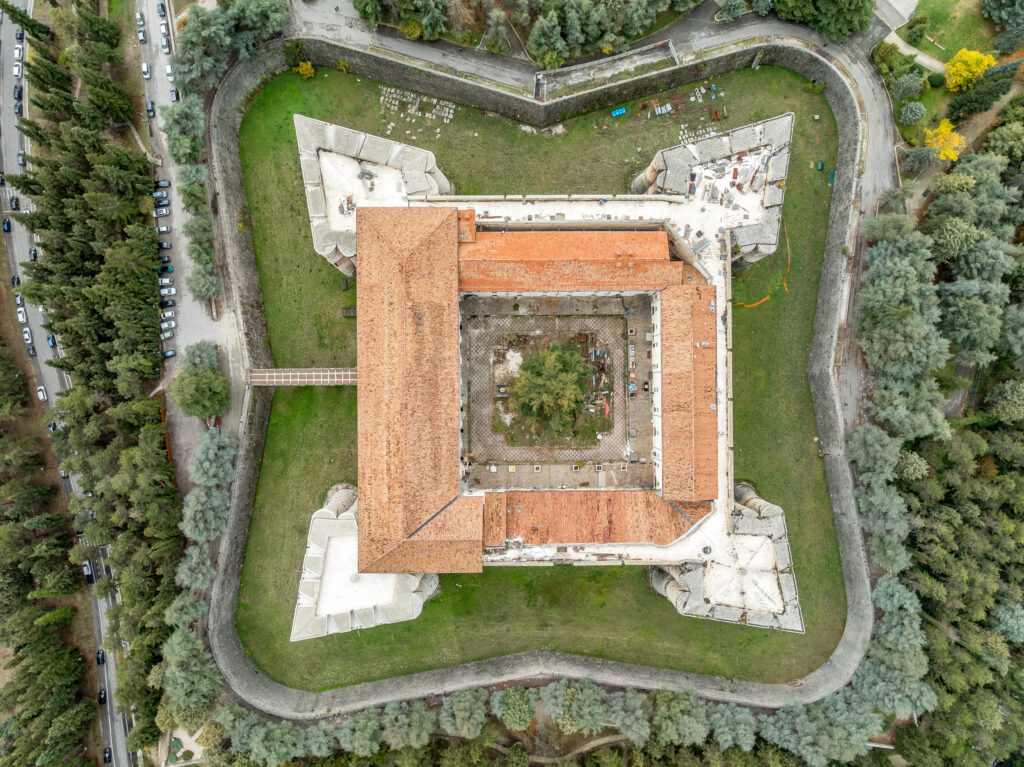
The massive profile of the Spanish Fort is a constant presence for those arriving in L’Aquila from the A24. Built beginning in 1534 at the behest of Emperor Charles V after the city’s rebellion against Habsburg rule, the castle represents one of the most impressive examples of Renaissance military architecture in central Italy.
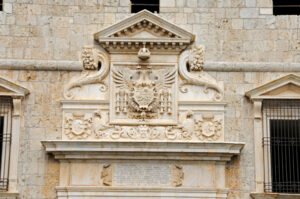 Paradoxically, the fortress was not created to defend the city, but to control it. Mighty ramparts, moat, walls designed to resist modern artillery: everything speaks the language of imperial power. Emblematic is the Latin motto engraved on the entrance portal, “Ad reprimendam audaciam aquilanorum,” a warning intended to “repress the audacity” of the Aquilans. An inscription that time has turned into a symbol of the city’s proud and independent character, rather than a threat.
Today the Fort has profoundly changed its function and significance. Back as the home of MUNDA – National Museum of Abruzzo since last December, it represents one of the territory’s most important cultural hubs. The museum’s rooms hold masterpieces of Abruzzo art and tell the story of a region that, even after the wounds of the 2009 earthquake, continues to invest in culture as a lever of rebirth.
Visiting the Fort means walking in the footprints of History, but also overlooking one of L’Aquila’s most striking views, with the gaze embracing the urban center and the Gran Sasso massif. It is an essential stop for those who want to understand the soul of the city, combining history, architecture and landscape.
Bominaco: ruins, views and captains of fortune
A few kilometers from L’Aquila, leaving the highway to enter the Navelli plateau, one encounters the ruins of Bominaco Castle, perched in a commanding position. Today walls and silences remain, but the evocative power of the place is intact.
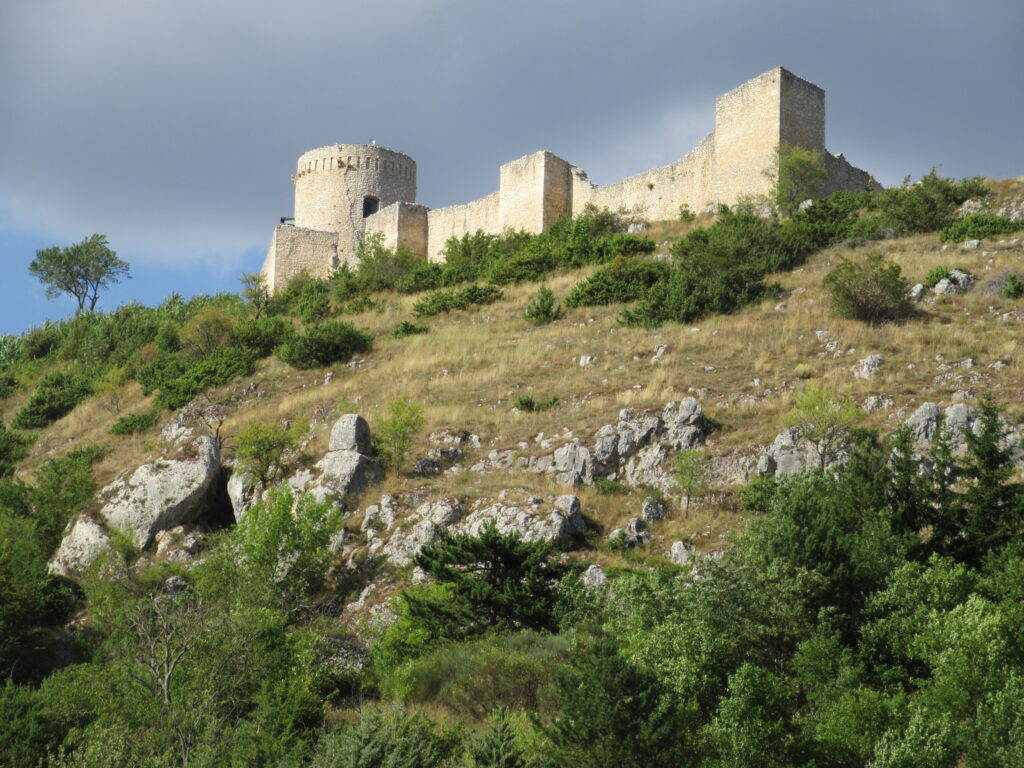
The castle was the scene of the struggles between the Angevins and the Aragonese, and its events are intertwined with one of the most fascinating figures of 15th-century Italy: Braccio da Montone, a Perugian mercenary captain, ambitious strategist, and protagonist of military campaigns that redrew the balance of central Italy. Braccio found his death in L’Aquila itself, in 1424, during a siege that profoundly marked the city’s history.
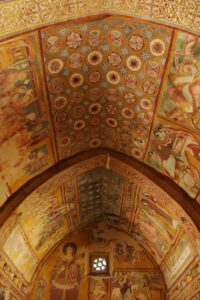 Today Bominaco is a perfect destination for those who enjoy slow, scenic tourism. From the castle ruins, the gaze sweeps over the surrounding highlands and villages, in a setting that invites pause and discovery. A short distance from the castle ruins, almost hidden in the silence of the plateau, is one of the absolute jewels of Abruzzo’s medieval religious architecture: theOratory of San Pellegrino. Built between the late 11th and early 12th centuries, it is known as the “Sistine Chapel of Abruzzo” for the extraordinary cycle of frescoes that entirely cover its walls, a figurative tale of great refinement that spans time with impressive integrity. A visit to the Oratory, together with the remains of the castle and the nearby Romanesque church of Santa Maria Assunta, transforms Bominaco into a stage of extraordinary intensity, where military architecture, spirituality and landscape come together in a unique experience.
An invitation to get off the highway
The Spanish Fort of L’Aquila and the Bominaco Castle tell two eras of history, two different ways of experiencing castles in Abruzzo: one urban, monumental, now fully restored to cultural enjoyment; the other romantic and scenic, nestled in the landscape. Both are easily reached from the L ‘ Aquila Est and L’Aquila Ovest exits of the A24 highway, with short detours that turn travel into experience.
As with Civitella del Tronto, the invitation here is to slow down, get off the highway and discover places where history is not only preserved, but lived. A heritage that accompanies those who travel the A24 and A25 every day and continues to define the deep identity of these territories, a natural bridge between the center and south of the peninsula.