Anyone traveling along the A24 between Rome East and Carsoli can catch glimpses of them here and there on the ridges, hidden among olive groves, beech forests, or nestled among houses. Some appear suddenly atop a village; others overlook the valley from rocky outcrops that seem unreachable. These are the castles of the middle Aniene Valley, a dense network of fortresses that for centuries controlled roads, pastures, forests, mills, and fords in a strategic territory between Rome and the Apennines.
Their history, however, is not merely one of sieges, towers, and feudal lords. It is also the story of a long-standing rivalry between the religious power of the Benedictine monasteries—particularly those linked to Subiaco and San Cosimato—and that of the great Roman families who sought to assert their dominance along the valley. This rivalry gave rise to castles, abbeys, fortified villages, and defensive systems that still define the landscape traversed by the highway today.
Between the Renaissance and the modern era, when wars and raids became less frequent, many of these fortresses gradually lost their military function. The Colonna, Theodoli, Brancaccio, Cesi, Borghese, Cenci-Bolognetti, and Massimo families transformed them into elegant vacation homes, delightful retreats nestled in the Roman countryside.
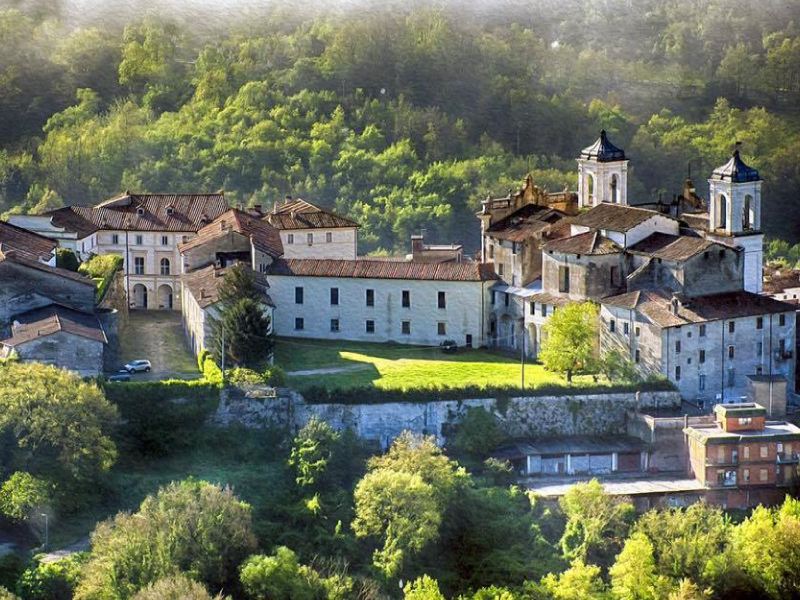
Lunghezza, Rome’s Fortified Gate
The journey begins just outside the capital, a couple of kilometers from the Rome East toll plaza on the A24 highway, where the Lunghezza highway interchange is also located. Lunghezza Castle has always stood along one of the main eastern approaches to Rome, commanding a view of the countryside traversed by the ancient Via Tiburtina.
Built on the ruins of the ancient city of Collazia, its origins are linked to the control of the routes leading to Tivoli and the Aniene River. Over the centuries, the manor passed through the hands of various noble families, mirroring the vicissitudes of the Roman Countryside. While retaining its original fortified layout, the complex gradually took on the appearance of a stately residence, foreshadowing the transformation that would eventually affect many castles in the valley.
Lunghezza Castle was not merely a stronghold defending the eastern approach to Rome. Tradition also links it to the signing of the famous Colonna Manifesto against Boniface VIII, one of the most bitter moments in the conflict between the papacy and the Roman barons at the end of the 13th century, following the abdication of Pope Celestine V. Today, it is a destination for school field trips and hosts events and performances for children.
San Gregorio da Sassola, the Brancaccio Fortress
Of all the castles along the Lazio side of the A24, the one at San Gregorio da Sassola is perhaps the most spectacular. Not far from Tivoli and situated at an elevation of about 500 meters, it overlooks both the Aniene Valley and the Roman countryside.
Its origins date back to the period of conflict between feudal lords and monasteries, when its proximity to the large Benedictine estates helped make the castle a strategic stronghold for the Colonna family. With the arrival of the Brancaccio family, the fortress was gradually transformed into a sumptuous princely residence.
Today, the castle—which has been restored through extensive renovations—hosts cultural activities, guided tours, and various events. For those traveling along the A24, it is undoubtedly one of the most spectacular detours along the entire route.
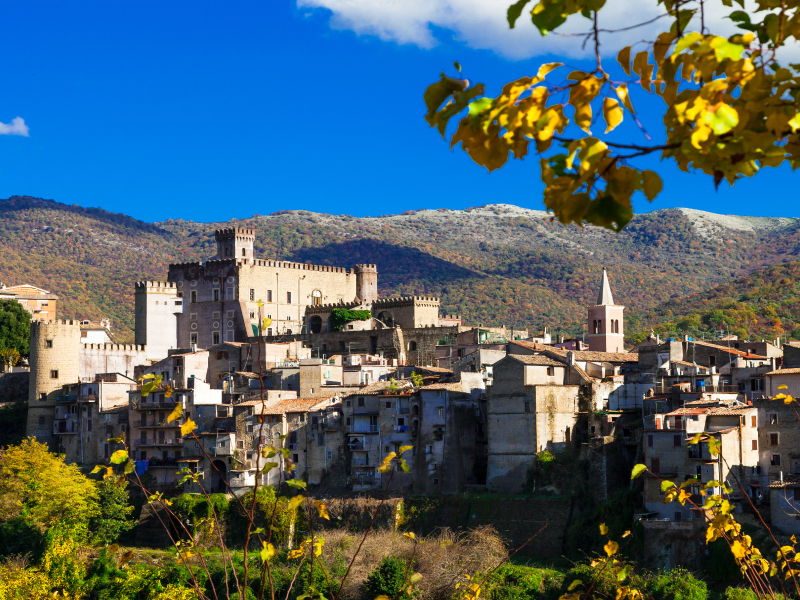
The Sambuci, Ciciliano, and Theodoli Families: Princes of the Valley
Leaving Tivoli behind and exiting the Vicovaro/Mandela toll plaza, one of the most prominent names in Roman aristocracy comes to the fore: the Theodoli family.
In the village of Sambuci, their castle still dominates the town with its historic rooms and Italian-style gardens. The complex perfectly illustrates the transition from medieval military architecture to an aristocratic residence. Here, visitors will find frescoed rooms and reception halls that evoke an era when the display of social prestige had become more important than armed defense.
The castle is open to visitors during events, special openings, and cultural initiatives organized throughout the year. We recommend checking with the Sambuci City Hall in advance.
Not far away stands another castle linked to the Theodoli family. The imposing fortress of Ciciliano, possibly built between the 9th and 10th centuries during a period marked by Saracen raids, still retains the austere character of a defensive structure. Its four corner towers and the compact masses of gray stone dominate the narrow Giovenzano Valley.
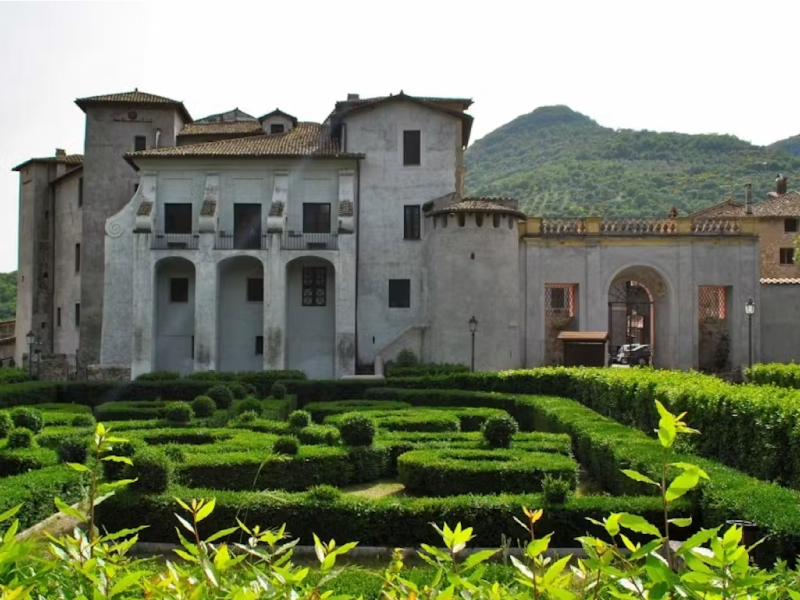
Vicovaro and Mandela: Between Monasteries and Castles
No place better illustrates the relationship between feudal lords and monasticism than the area between Vicovaro and Mandela.
Just a few minutes from the tollbooth lies the San Cosimato complex, where the hermitage and the monastery stand next to the caves frequented by St. Benedict. According to tradition, it was right here that the saint escaped an attempt to poison him by monks who opposed the strictness of his rule.
For centuries, Benedictine monasteries were among the largest landowners in the valley. Feudal families therefore had to contend with a religious power that was often as wealthy and influential as that of the secular lords.
In Mandela, surrounded by a large historic park, the Castello Del Gallo stands as a testament to the evolution of 18th- and 19th-century aristocratic residences. Frequented by travelers on the Grand Tour and associated with the stays of figures such as Goethe and Corot, it still retains today the charm of the residences that once welcomed European nobility on their journeys to Rome.
The complex, like the nearby Palazzo Cenci-Bolognetti in Vicovaro, is privately owned but periodically hosts events and activities open to visitors.
As you approach the border with Abruzzo, the highway runs at the foot of the Lucretili Mountains and leads to a series of smaller castles that complete the valley’s defensive network, such as Vivaro Romano, which preserves the ruins of the ancient Borghese Castle perched atop the village, or Riofreddo, with the imposing Colonna-Del Drago Castle looming over the small village, which was contested in the Middle Ages by the Colonna and Orsini families.
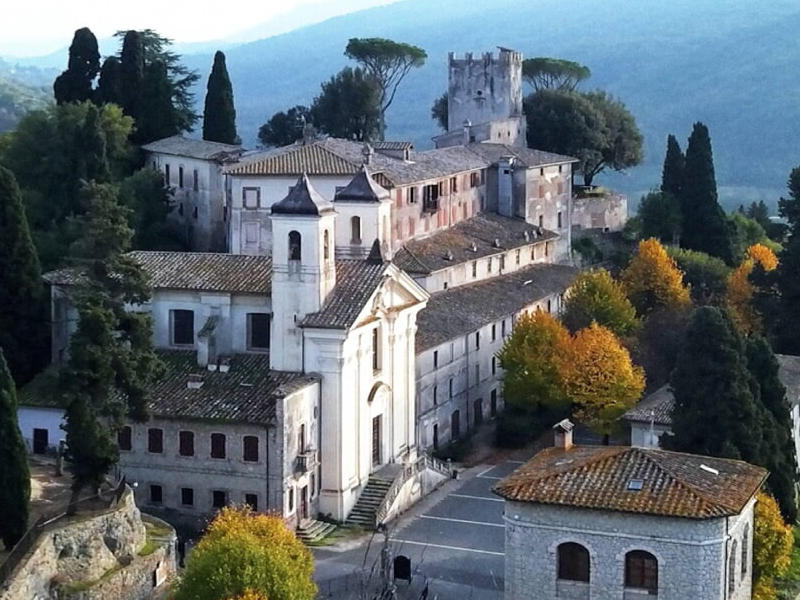
Roviano, Where the Castle Becomes a Museum
Among the most interesting manors from a museum perspective, Castello Brancaccio in Roviano stands out. It is easily visible from the A24 highway, just before entering the Roviano Tunnel for those coming from Rome. The fortress still overlooks the town, but today it also serves an important cultural function.
In fact, it houses the Museum of Rural Life, which preserves tools, documents, and artifacts from rural life in the Aniene Valley.
The tour thus allows visitors to explore two parallel histories: that of feudal power, represented by the castle, and that of the farming communities that have lived on and cultivated the surrounding lands for centuries.
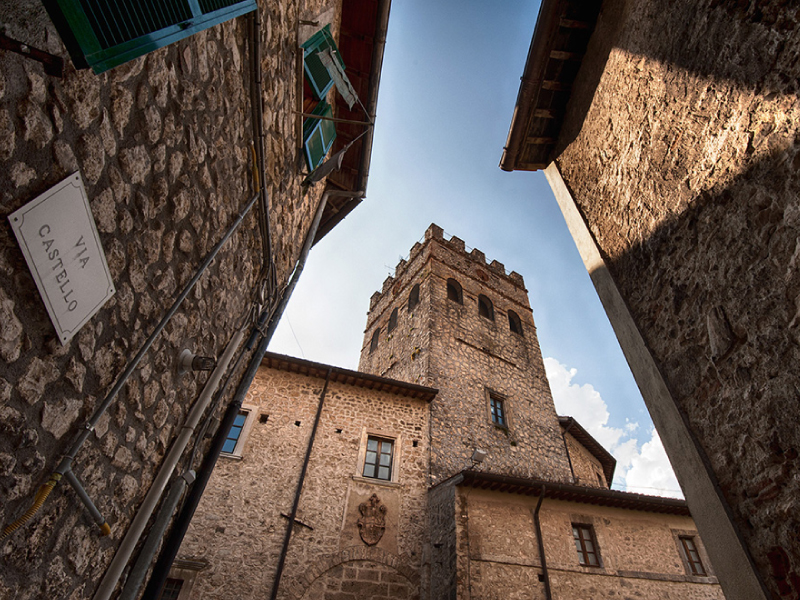
Arsoli and Castello Massimo, the valley’s masterpiece
The highlight of the itinerary, however, is Arsoli. Described by Luigi Pirandello as “little Paris” because of its orderly urban layout, the town is dominated by the imposing Castello Massimo.
Built on medieval foundations and radically transformed during the Renaissance and Baroque periods, the complex is one of the most significant examples in central Italy of the transition from a feudal fortress to a princely residence. Here, military architecture gives way to halls, courtyards, terraced gardens, and spectacular views that open onto the middle Aniene Valley. Contemplating it from afar in the fall, as it emerges from the morning mist, it almost feels as if one were standing before one of Ludwig II’s castles in Bavaria.
The castle is currently undergoing a major restoration and revitalization project. Although it is not yet fully accessible as it once was, the village of Arsoli and the surrounding landscape are still well worth a visit.
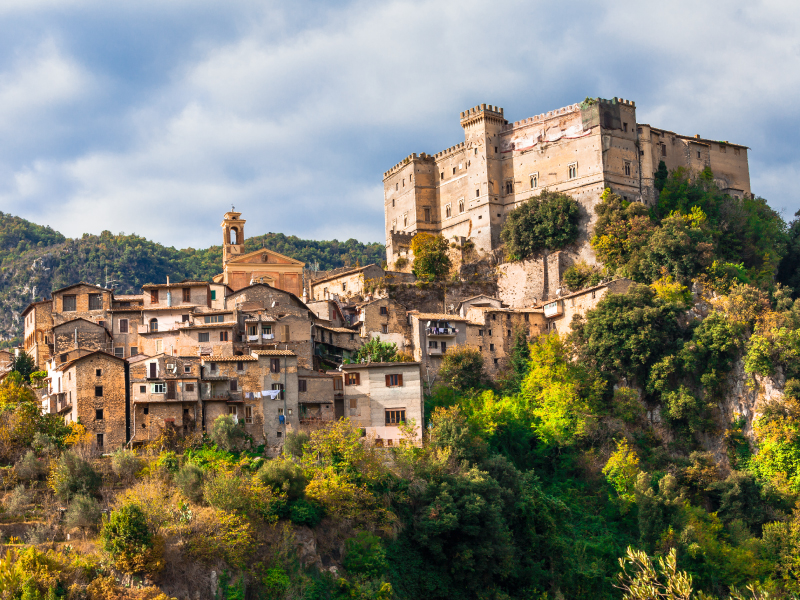
A Fairytale Valley
Viewed from the highway, these castles seem to emerge from the mountains as if from the pages of a fairy tale. Behind each tower lies a story that recounts centuries of rivalry between Benedictine monasteries and noble families, between religious authority and feudal power; but it is also the story of a gradual cultural transformation that turned places of war and territorial control into residences dedicated to beauty, art, and the landscape.
Even today, as you exit the Tivoli toll plazas, Castel Madama, Vicovaro-Mandela, or Carsoli-Oricola, you can trace this long historical journey through castles, gardens, museums, and villages that make up one of the richest and least-known monumental heritages of the Lazio Apennines.